Blog

  • EV Charging Dubai: Summer Heat Guide 2026

    EV Charging Dubai: Summer Heat Guide 2026

    Quick Summary

    • Extreme Dubai summer heat (often 45 °C+) significantly impacts EV battery range, charging speed, and long-term health. We’ll explain why.
    • Discover which charging stations and locations offer shade or fully indoor/tunnelled setups to protect your battery while charging.
    • Learn the best times of day to charge—night, early morning, or after cooling down—to avoid heat throttling and inefficiencies.
    • Find pre-conditioning and daily habits—set charging limits, cool cabin while plugged in, avoid 100% charges—that help sustain range and battery health.
    • All tailored for EV drivers in Dubai: including regulations, station examples, pricing considerations in AED, and cost-saving tips.

    How Dubai’s Summer Heat Impacts Your EV Battery

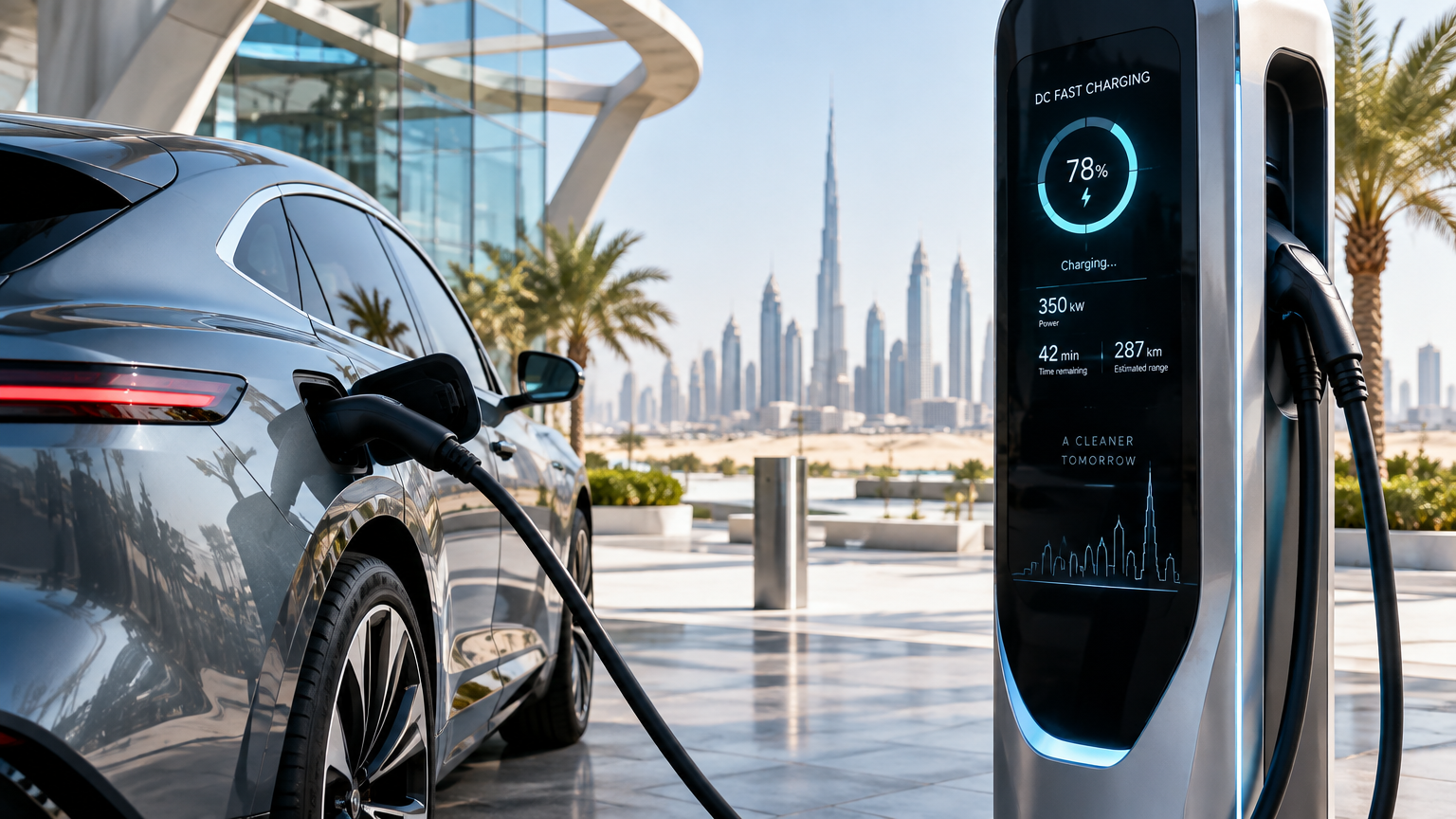
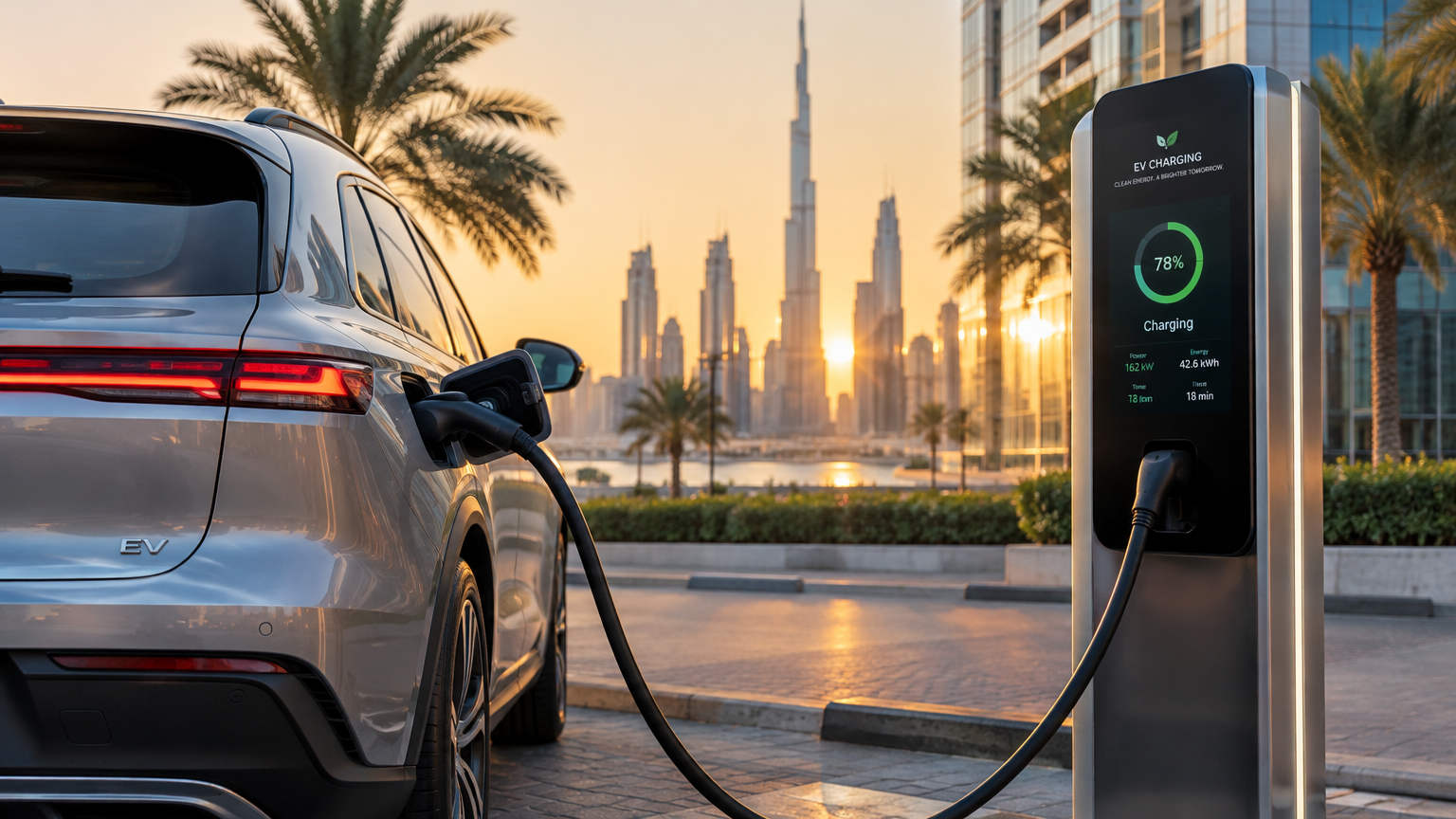
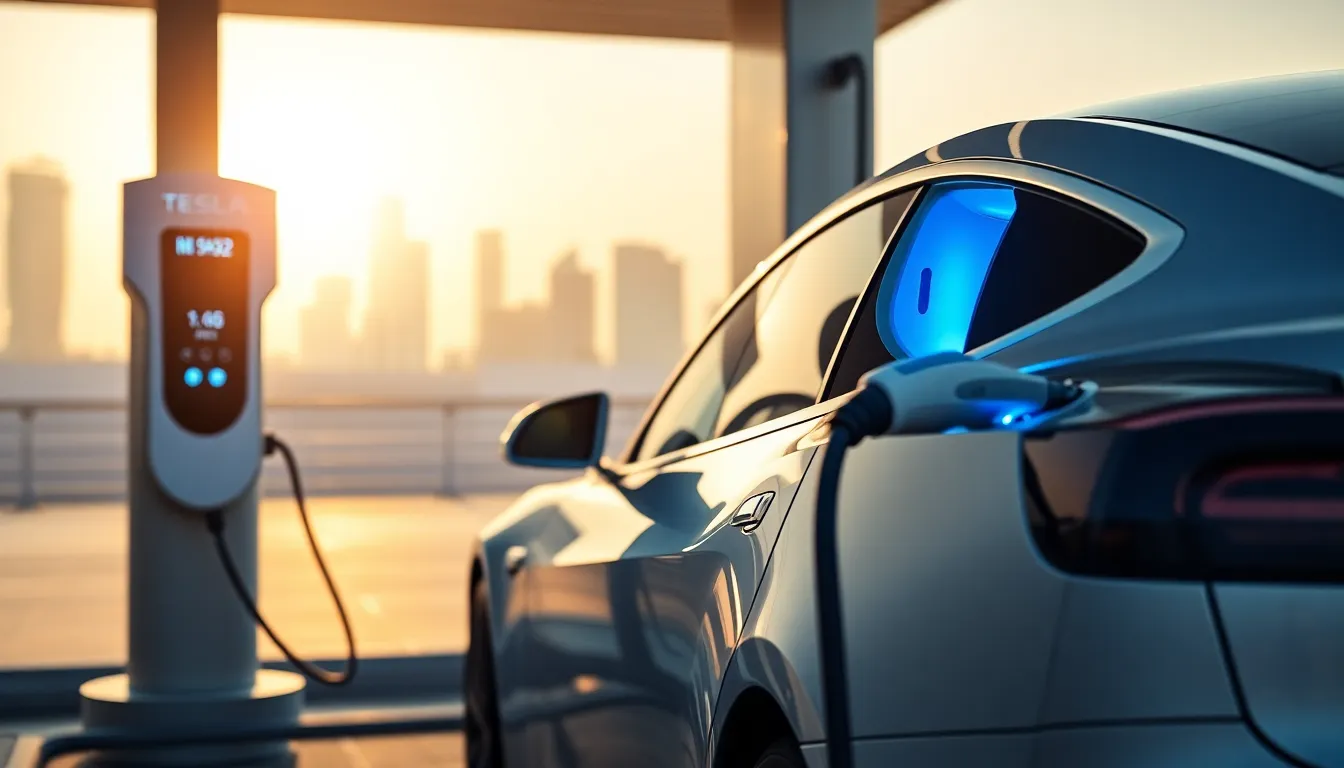
    Managing EV charging Dubai summer heat is critical for protecting your investment. When temperatures exceed 40 °C, your battery faces real stress. Understanding this challenge helps you make smarter charging decisions and extend your vehicle’s lifespan.

    Battery Efficiency and Chemical Breakdown

    Lithium-ion batteries perform best between 20-30 °C. Above 40 °C, chemical reactions accelerate. The electrolyte degrades faster. Internal resistance increases. This means your battery’s capacity drops temporarily, and repeated exposure causes permanent damage at the electrode interfaces. (doi.org)

    Real-World Range Loss

    Dubai’s summer heat (45 °C+) causes range losses of 10-20% or more. Your air conditioning system demands extra energy. The battery must work harder to cool itself. Combined, these factors reduce the distance you can travel on a single charge. (jadgarage.com)

    Charging Speed and Long-Term Degradation

    Fast charging generates internal heat. If your battery is already hot, the Battery Management System (BMS) throttles the charging current to protect cells. This slows charging even when the charger could deliver more power. Over time, repeated fast charges in heat increase degradation through lithium plating, electrolyte breakdown, and heat-driven chemical reactions. (jadgarage.com)


    Choosing the Right Charging Location for Summer Heat Protection

    Prioritise Covered and Indoor Charging

    Charging in shaded or indoor locations prevents your battery from absorbing extra heat before and during the charging session. This is your first line of defence against heat throttling.

    Top mall charging locations in Dubai:

    • Mall of the Emirates – Basement B2 near Carrefour features ~50 kW chargers. The basement location keeps your vehicle cool. (evmap.ae)
    • Dubai Mall – P2 and P3 levels in the Green Zone offer covered basement parking. Fully protected from summer sun and heat. (evmap.ae)
    • Dubai Festival City Mall – P2 North and South feature Plug & Go chargers with partial shade and covered parking areas. (dubaifestivalcitymall.com)

    Solar carports and covered parking structures with chargers offer additional benefits. You gain shade plus cooler ambient temperatures under solar canopies. (wisermonks.com)

    Check Equipment Standards and Certifications

    Public and home chargers in Dubai are regulated by DEWA. This ensures your equipment is built for extreme heat.

    • All equipment must withstand ambient temperatures up to 55 °C and humidity to 95%. (dewa.gov.ae)
    • Connectors must comply with Type-2 (AC) or CCS2 (DC) standards. (dewa.gov.ae)
    • Licensed Charge Point Operators (CPOs) are required for safe installations. Always verify the station is operated by a DEWA-licensed CPO. (dewa.gov.ae)

    Best Times to Charge and Avoid Heat Throttling

    Time of Day Expected Outdoor Temp Why It’s Better / Risks
    Late night to before sunrise (10 pm – 5 am) ~28–35 °C Lowest ambient temperatures. Battery is cooler. Off-peak electricity rates often apply.
    Early morning (5 am – 9 am) ~30–38 °C Good balance if overnight charging isn’t possible. Battery has cooled during rest.
    Midday to late afternoon (12 pm – 5 pm) 45–50 °C Peak heat. Chargers throttle power. Range loss is steepest. Avoid if possible.
    After motorway driving or fast-charging Battery may exceed 45 °C Allow 30-60 minutes cooling before fast charging again. Prevent overheating damage.

    Why Overnight and Early Morning Charging Works Best

    • Lower outdoor temperatures mean less thermal load on the battery.
    • Your car and battery are cooler after resting overnight.
    • Air-conditioning demand is minimal, so less energy is diverted from charging.
    • Chargers themselves operate within safer operating specifications.

    DEWA regulations require outdoor charging equipment to support full output up to 55 °C ambient. However, when battery surface temperatures are higher, the BMS throttles power to protect cells. (dewa.gov.ae)


    Pre-conditioning and Daily Charging Habits That Protect Your Battery

    Use Pre-conditioning While Plugged In

    Many modern EVs allow you to trigger thermal management or climate control while connected to power. This uses grid electricity instead of battery energy. Activate this feature before your morning drive to cool the battery in advance.

    Some vehicles support “navigate to charger” features in their apps. This automatically triggers battery cooling or pre-conditioning when you approach a charging station. This prevents slow charging due to high battery temperature. (wattsimple.com)

    Set Smart Charging Limits

    • Daily charging: Keep your charge limit at 80% for routine use. Reserve 100% charging only for longer trips. The final 5-10% of capacity creates extra stress and heat. (jadgarage.com)
    • Avoid letting your battery drop below 20%. Maintaining a buffer reduces stress during thermal cooling cycles.

    Maintain Cooling Systems and Use Accessories

    • If your EV has liquid cooling or thermal management systems, inspect coolant levels, radiators, and hoses annually. Clean dust and blockages improve performance. (jadgarage.com)
    • Use window tint and sun shades (within legal limits) to reduce cabin heating.
    • Park in shade or indoor garages whenever possible. Covered parking reduces battery and cabin temperatures by several degrees.

    Protect Your Charger and Cables

    • Use high-quality chargers with correct IP (weather-proof) ratings for outdoor installations.
    • Don’t leave cables coiled in direct sunlight. Ensure good ventilation around the charger.
    • In extreme heat, use gentle charge rates or allow rest periods between fast-charging sessions.

    Dubai EV Charging Costs and Budget Planning

    • Public charging rates: Fast chargers (DC) cost more per kWh than AC chargers. Expect AED 1.50-2.50/kWh at fast chargers and AED 0.60-1.20 at slower public or mall chargers. (Check current DEWA and operator pricing.)
    • Home charger installation: Costs vary by parking type. Villas typically cost AED 3,000-6,000. Apartments may need building management approval and additional electrical work.
    • Off-peak savings: DEWA offers lower rates during night hours. Charging overnight saves both battery wear and money on electricity.
    • Compliance costs: Installing public or semi-public chargers may require DEWA approvals per EV Charging Infrastructure Regulation. Non-licensed installations can result in enforcement action. (dewa.gov.ae)

    Best Charging Locations: Local Examples

    Location Charger Type Protection from Heat Charging Details
    Dubai Mall, P2 & P3 (Green Zone) AC / DC, Type-2 / CCS up to 60 kW Fully covered basement parking with shaded access Often busy on weekends; best on weekday mornings or overnight
    Mall of the Emirates, Basement B2 ~50 kW chargers Basement location protects from daylight and heat Ideal for mid-range top-ups with minimal battery stress
    Dubai Festival City Mall, P2 North/South Plug & Go chargers Partially shaded with some covered parking areas Good for shopping-trip charging; arrive after sunset if possible

    How to Choose the Right Charger and EV Model for Heat Resilience

    When selecting a charger or considering an EV purchase for Dubai’s climate, evaluate these key factors:

    Thermal Management System

    Liquid-cooled battery packs perform significantly better in extreme heat than air-cooled alternatives. Look for heat pumps or efficient HVAC systems that reduce cabin cooling demands on the battery.

    Charging Power and Thermal Management

    High-power DC chargers are convenient but stress the battery more. In Dubai’s summer, spreading charging across slower AC sessions often preserves long-term battery health better than frequent fast charging.

    Vehicle Features for Summer Charging

    • Can you schedule charging during cooler hours via your vehicle’s app?
    • Does the car support “navigate to charger” preconditioning or remote climate control?
    • Look for models with intelligent battery management designed for hot climates.

    Home and Parking Conditions

    • Is your parking shaded or indoors? This makes a huge difference.
    • Do you have adequate electrical capacity for a home charger?
    • Ensure any outdoor EVSE complies with DEWA regulations (operation up to 55 °C ambient). (dewa.gov.ae)

    Frequently Asked Questions

    Q: How much range will I lose in Dubai’s summer midday heat?

    A: In peak heat (45 °C+) with high AC use and sun exposure, expect 10-20% range reduction compared to cooler conditions. Frequent fast charging or highway speeds can increase this loss. (jadgarage.com)

    Q: Does fast charging above 50 kW damage my battery more in summer?

    A: Yes. Fast charging generates heat internally. If your battery is already hot, the BMS reduces charging speed to protect cells. Back-to-back fast charges without cooling time accelerate degradation. (jadgarage.com)

    Q: Is daily 100% charging safe?

    A: For daily use, no. Keep your battery between 20-80% charged. Full 0-100% cycles stress the battery, especially in high temperatures. Only charge to 100% before longer trips. (jadgarage.com)

    Q: What exactly is battery pre-conditioning?

    A: Pre-conditioning cools (or warms in winter) your battery pack using grid power while plugged in. In summer, cooling before fast charging reduces range loss and prevents throttling. Many EVs support scheduled departure or charger-destination navigation to trigger this automatically. (wattsimple.com)

    Q: How does DEWA protect my charger and battery in extreme heat
  • DEWA vs Third-Party EV Charging: Which Is Best?

    DEWA vs Third-Party EV Charging: Which Is Best?

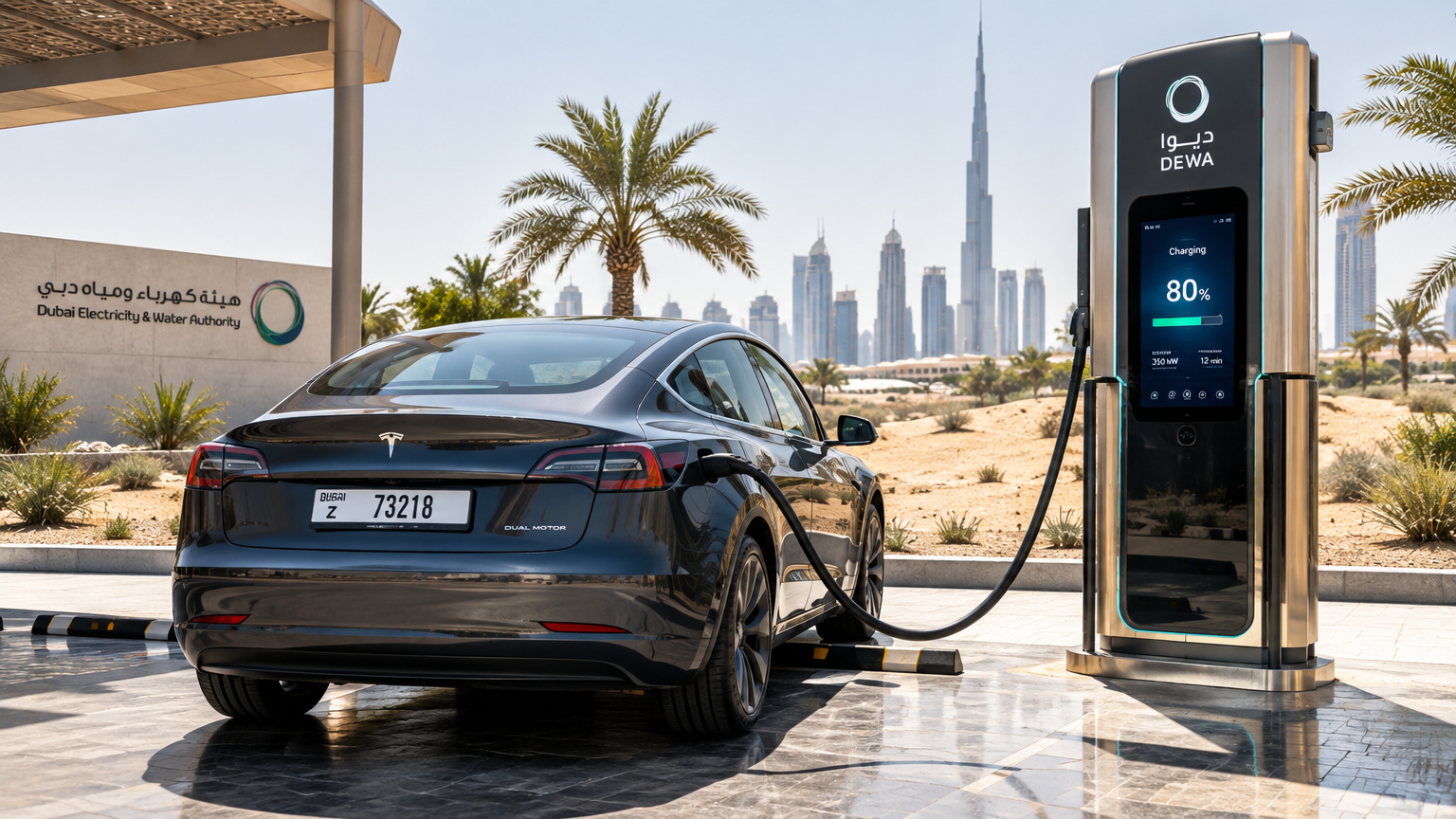
    Choosing between DEWA vs third-party EV charging networks in Dubai depends on your driving habits, access to home charging, and budget. This guide compares rates, reliability, and real-world costs to help you pick the most cost-effective option for your EV.


    Quick Summary

    • Rates & tariffs: DEWA’s public Green Charger network mandates minimum rates: AED 0.70/kWh + VAT for AC charging, AED 1.20/kWh + VAT for DC charging. (dewa.gov.ae)
    • Third-party operators (Charge&Go, UAEV, ION, ADNOC e-Tap) follow these minimum rates but may charge more for premium locations or high-power chargers. (plaidcars.com)
    • Membership and fees: DEWA requires a refundable AED 500 security deposit plus AED 20 delivery fee—no recurring subscription. Third-party operators cannot charge subscription fees under Dubai regulations. (dewa.gov.ae)
    • Charger availability: DEWA operates ~1,860 public charging points across Dubai with AC (7-22 kW) and DC fast-charging units (50-150 kW). Third-party networks are expanding with variable reliability. (evplus.ae)
    • Best value depends on your profile—daily commuter, long-distance traveler, home charging access, or heavy DC user. We’ll show you specific cost scenarios.

    The Dubai EV Charging Landscape

    DEWA Green Charger Network

    DEWA is Dubai’s official utility operator. Since 30 September 2024, their regulated rates are:

    • AC charging: AED 0.70/kWh + VAT (~AED 0.735/kWh)
    • DC fast charging: AED 1.20/kWh + VAT (~AED 1.26/kWh)

    Registration costs a refundable AED 500 security deposit and AED 20 card delivery fee. Once registered, you pay only per-kilowatt rates—no monthly subscription or membership charge. Guest mode is also available with the same rates but includes a temporary payment hold. (dewa.gov.ae)

    Third-Party Operators

    Independent Charge Point Operators (CPOs) like Charge&Go, UAEV, ION, and ADNOC e-Tap must follow DEWA’s Unified Charging Tariff minimums under the EV Charging Regulation:

    • Minimum AC rate: AED 0.70/kWh + VAT
    • Minimum DC rate: AED 1.20/kWh + VAT

    Many operators charge these regulated minimums, but premium locations—airports, luxury hotels, roadside ultra-fast chargers (150+ kW)—may exceed these by AED 0.10 to AED 0.40 per kWh. (chargeandgo.ae) Dubai regulations prohibit subscription-only fees for public charger access, though overstay and idle charges may apply. (dewa.gov.ae)


    Key Cost Factors: What Determines Your Charging Bill

    Factor Impact on Cost
    AC vs DC charger type DC is 70% more expensive per kWh but charges 5–10× faster. Choose based on time availability.
    Charging frequency and mix Regular overnight AC charging is cheapest. Frequent DC use significantly increases costs.
    Charger availability and uptime Broken or busy chargers force you to travel further or wait, adding time-cost and frustration.
    Home charging access Residential rates (~AED 0.23–0.38/kWh) are 50–70% cheaper than public rates. This is the biggest cost advantage if available.
    Overstay and idle fees Leaving your car plugged after charging ends can add AED 0.10–0.30/minute on third-party networks.
    Driver profile Commuters, road-trippers, ride-hailing drivers, and fleet operators each benefit from different networks.

    Complete Pricing Breakdown

    Charging Type DEWA Public Rate Third-Party Operators Home Charging Rate
    AC (public) AED 0.735/kWh (incl. VAT) AED 0.735/kWh minimum; premium locations AED 0.80–0.90/kWh AED 0.305–0.462/kWh (incl. VAT, fuel surcharge, slab-based)
    DC fast charging (public) AED 1.26/kWh (incl. VAT) AED 1.26/kWh minimum; ultra-fast DC AED 1.40–1.60/kWh at premium hubs Not available
    Registration / Membership AED 500 refundable deposit; AED 20 delivery fee; no subscription No subscription fees allowed; possible session or overstay fees Installation cost AED 3,000–8,000 upfront; included in home electricity bill

    Note: All public rates include 5% UAE VAT. Home rates vary by DEWA consumption slab and location.


    Real-World Cost Scenarios: Weekly Charging (400 km)

    Let’s compare actual costs for three driver profiles charging 400 km per week (~72 kWh for a typical EV at 18 kWh/100 km). All figures include VAT.

    Profile A: Daily Commuter with Home AC Charging

    Mix: 80% home or workplace AC, 20% public DC (occasional long trips)

    • Home/AC: 57.6 kWh × AED 0.40 (average home rate) = AED 23.04
    • DC public: 14.4 kWh × AED 1.26 = AED 18.14
    • Total: ~AED 41/week (AED 2,132/year)

    Profile B: Mixed User (No Home Charging)

    Mix: 50% public AC, 50% public DC

    • AC public: 36 kWh × AED 0.735 = AED 26.46
    • DC public: 36 kWh × AED 1.26 = AED 45.36
    • Total: ~AED 72/week (AED 3,744/year)

    Profile C: No Home Access, Heavy DC User

    Mix: 20% public AC, 80% public DC fast charging

    • AC public: 14.4 kWh × AED 0.735 = AED 10.58
    • DC public: 57.6 kWh × AED 1.26 = AED 72.58
    • Total: ~AED 83/week (AED 4,316/year)

    Key insight: Home charging saves Profile A ~AED 31/week versus Profile B. Installing a home charger (AED 3,000–8,000) typically pays for itself in 2–3 years.


    Charger Availability, Coverage, and Reliability

    DEWA Coverage

    DEWA operates approximately 1,860 public charging points across Dubai, including:

    • AC chargers: 7–22 kW at shopping malls, fuel stations, and parking lots
    • DC fast chargers: 50 kW and 150 kW+ units on major roads, fuel forecourts, and high-traffic areas
    • Key zones: Downtown Dubai, Business Bay, JBR, Marina, and emerging hubs in Jumeirah and Dubai Hills

    Third-Party Networks

    Private networks are expanding but with variable uptime. Newer operators sometimes experience maintenance delays. Coverage is best in central Dubai; suburban areas have fewer options.

    Plug Standard Compatibility

    Most public chargers use:

    • AC Type 2: Standard in Europe and increasingly adopted globally
    • DC CCS2 and CHAdeMO: CCS2 dominates new EVs; CHAdeMO is older but still present
    • GB/T (Chinese standard): Rare in Dubai; requires adapters if your EV uses this

    Check your EV’s connector type before relying on third-party fast chargers. (evplus.ae)


    Hidden Costs: Watch Out for These

    Overstay and Idle Fees

    After your EV finishes charging, leaving it plugged in past a grace period (typically 5–10 minutes) triggers per-minute penalties. Common on third-party DC stations at malls:

    • Typical overstay fee: AED 0.10–0.30 per minute
    • For 30 minutes of overstay: AED 3–9 extra charge

    Premium Location Surcharges

    Airports, luxury hotels, and ultra-fast charging hubs may charge above regulated minimums. Expect AED 0.20–0.40/kWh premium in these locations.

    Charging Speed Taper

    DC chargers deliver high power initially but slow significantly above 80% charge. Paying AED 1.26/kWh for slow charging near full capacity is wasteful. Optimal DC use: 20–80% charge only.

    Home Charger Installation

    If you want to install a home charger:

    • Charger hardware: AED 1,500–3,000
    • Electrician and approvals: AED 1,500–5,000
    • Total upfront cost: AED 3,000–8,000
    • Payback period with regular use: 2–3 years

    Which Network Is Best for Your Profile?

    Driver Type Best Option Why
    Daily commuter with home/work AC access DEWA Green Charger for AC top-ups + home charging Lowest per-kWh cost. Use DC only for weekend road trips. Total annual cost: ~AED 2,100–2,500.
    Mixed use: some home, some public DEWA for both AC and DC; third-party for backup when DEWA is full Stick to regulated minimum rates. Avoid premium locations. Total annual cost: ~AED 2,500–3,500.
    No home charging, frequent DC use Reliable third-party DC hubs near your travel routes; minimize overstay fees Seek fast chargers with good uptime records. Plan routes to avoid long waits. Total annual cost: ~AED 4,000–5,000.
    Fleet or ride-hailing Dedicated home depot charging + contract with reliable DC operator for backup Uptime is critical. Negotiate bulk rates if possible. Focus on minimizing downtime.
    Occasional driver (<100 km/week) DEWA public AC only; no need to register if rare use Guest mode covers occasional charging. No registration cost. Total annual cost: <AED 1,000.

    Dubai-Specific Considerations

    Regional Charger Gaps

    Central Dubai (Downtown, Marina, Business Bay) has excellent coverage. However, outlying areas like Hatta, Lehbab, and parts of Sharjah lack public chargers. Plan long routes accordingly or install home charging.

  • DC Fast Charging Dubai: Best Stations & Costs 2026

    DC Fast Charging Dubai: Best Stations & Costs 2026

    Choosing the right charging method in Dubai depends on your daily driving, budget, and access to home charging. This guide explains when DC fast charging Dubai delivers real value—and when slower AC charging works just fine for your needs.


    Quick Summary

    • Explains AC Level 2 vs DC fast charging: how they work and what charging speeds you’ll get in real life for Tesla Model 3, Hyundai Ioniq 5, and BMW iX.
    • Compares prices per kWh and per 100 km between slow AC, standard DC fast (public), and premium DC like Tesla Superchargers & ADNOC.
    • Maps which operators in Dubai offer which charger types (DEWA Green Charger, ADNOC e-Tap, Tesla Superchargers, ENEC etc.).
    • Includes a decision matrix: based on daily mileage, whether you can charge at home, and what kinds of trips you do.
    • Helps you answer: Should I pay extra for fast charging or is slow charging enough for my driving?

    AC Level 2 vs DC Fast Charging: What’s the Difference?

    • AC Level 2 (slow to medium) uses alternating current at up to about 22 kW. These are your regular DEWA Green Chargers with Type-2 sockets, commonly found at malls and street locations.
    • DC fast charging (50 kW–250 kW+) converts AC at the charger, sending direct current straight to the EV battery. It lets you go from 10–80% in 15–30 minutes on good DC chargers. Essential for quick recharges on longer journeys. (dewa.gov.ae)

    Charging speeds for popular EVs in Dubai under ideal conditions:

    EV Model Battery Size Max AC Charge Rate (real-world) Max DC Fast Charge Rate Typical 10–80% DC Time
    Tesla Model 3 ~75-80 kWh (Long Range) ~7-11 kW (public AC, home) Up to ~250 kW with V3 Supercharger ~20-25 minutes (chargeae.com)
    Hyundai Ioniq 5 ~72.6-77 kWh (Long Range) ~11 kW (public AC) Up to 350 kW on ultra-fast DC ~18 minutes (hyundai-uae.com)
    BMW iX ~76-111 kWh ~11-22 kW AC Up to ~150-200 kW DC ~25-30 minutes (en.wikipedia.org)

    These are ideal numbers. Temperature, battery state, charger load, and other factors will affect actual speeds.


    How Much It Costs: AC vs DC in Dubai

    DEWA & UAE Regulated Rates (Cabinet Resolution 81/2024)

    • Public AC charging via DEWA Green Chargers: AED 0.70/kWh + VAT (≈ AED 0.735/kWh) (dewa.gov.ae)
    • Public DC fast charging (50 kW+): AED 1.20/kWh + VAT (≈ AED 1.26/kWh) (dewa.gov.ae)

    Tesla Superchargers

    • Tesla’s DC Supercharger rate in Dubai typically runs around AED 1.50/kWh at 250 kW stations in Dubai urban areas. (chargeae.com)
    • Prices vary by location—sometimes as low as AED 0.73–AED 1.30 based on public reports. (plaidcars.com)

    Home Charging (using DEWA residential electricity)

    • Typically AED 0.23–0.38 per kWh for overnight charging. Your actual rate depends on your electricity consumption slab. (plaidcars.com)

    Cost-Per-100 km Comparison

    Here’s what 100 km of driving costs for a mid-size EV in Dubai (typical consumption: 16–18 kWh/100 km). We assume using the most efficient part of the battery.

    Charging Type Rate (AED/kWh) Cost per 100 km
    Home Overnight (DEWA residential) AED 0.23–0.38 AED 4–7
    DEWA Public AC (Green Charger) AED 0.70 AED 11–13
    DEWA / UAEV Standard DC Fast AED 1.20 AED 19–22
    Tesla Supercharger Premium DC AED 1.50 (or site rate) AED 24–27
    • At 1,500 km/month, home charging might cost AED 60–100, while frequent DC fast charging runs AED 190–230+ depending on your network choice. (plaidcars.com)

    Who Offers Which Charger Types in Dubai

    Network / Operator Connector Types and Power Where Found (Areas)
    DEWA Green Charger AC 7–22 kW public chargers, fast chargers (43 kW AC + 50 kW DC), ultrafast 150 kW DC options. (dewa.gov.ae) Petrol stations (ENOC/ADNOC), malls, public streets
    ADNOC / ADNOC e-Tap DC fast chargers (CCS2 / CHAdeMO), typically 60–150 kW Fuel-forecourt hubs across Dubai–Abu Dhabi highway, Al Quoz, and beyond
    Tesla Supercharger Network (UAE) Tesla V3 / V4 Superchargers, up to 250 kW at many locations. (chargeae.com) Dubai Urban, Dubai Marina, Dubai Hills Mall, plus along E11 highway
    Other Licensed CPOs (UAEV, ChargePoint, etc.) DC fast chargers (various power levels), AC chargers across network Expanding across Dubai suburbs, highway service areas. (dewa.gov.ae)

    When Fast Charging Beats Slow: Decision Matrix

    Use this matrix to assess your own driving and charging needs:

    Your Profile Home / Workplace Charging? Daily Driving Distance Long Trips (inter-emirate, highway)? What Makes Sense
    Mostly <60 km/day, live in villa or have garage ✅ Yes Low to Moderate Rarely AC Level 2 at home + occasional slow public AC; DC fast only when needed (cost is high)
    60–150 km/day, commute + errands Partial or shared charging High Occasional (trip to Abu Dhabi etc.) Mix: Home AC daily; DC fast for highway or unplanned quick fill-ups
    Live in apartment, limited home options ❌ No Variable Frequently travel long distances DC fast becomes valuable; explore faster AC charger installation at home if feasible
    Often driving highways or last-minute schedules Mixed High Frequent long trips Prioritize DC fast in your route; consider premium options like Tesla Supercharger or ADNOC for speed

    Case Studies: How it Plays Out

    Scenario A: Local commuter with home charging

    You drive 50 km/day with access to home charging, mainly around Dubai (Downtown, Marina). Long trips past Abu Dhabi are rare. AC charging meets nearly all your needs. Fast DC is expensive per kWh and only useful in emergencies.

    Scenario B: Commercial driver or frequent traveler

    You drive a taxi or delivery service across the Dubai–Abu Dhabi corridor often. Time is money. Home charging helps, but DC fast stations on route (ADNOC, Tesla Supercharger) are essential. You absorb the higher cost because of the time saved.

    Scenario C: Tesla Model 3 owner with mixed usage

    Tesla Model 3 Long Range, 18 kWh/100 km. Home charging: AED 4–7/100 km. DEWA DC at AED 1.20/kWh: AED 22/100 km. Tesla Supercharger: ~AED 25/100 km. Using DC rarely keeps your overall monthly cost low.


    Should You Pay Extra for Fast Charging?

    You should pay extra for DC fast charging if:

    • You’re frequently on the go and need quick fill-ups (long trips, travel, no home charging).
    • The time you save outweighs the extra cost per km.

    You don’t need to pay extra if:

    • You can charge overnight at home or at your workplace.
    • Your daily drive is modest (<80–100 km) and you can plan ahead.

    The key is balancing cost versus convenience. Extra cost makes sense only when time, stress, or travel patterns require it.


    Frequently Asked Questions

    Q1: Does DC fast charging harm battery health more than AC or home charging?

    Not significantly for modern EVs when used properly. Heat and charge rate matter most. Most EVs taper down charge speed past 80%. Use DC fast charging as needed, not habitually to full 100%.

    Q2: Can non-Tesla cars use Tesla Superchargers in Dubai?

    Tesla UAE Superchargers use CCS2/DC for many locations, which non-Tesla EVs support. Check each stall’s connector type. The Tesla app will show compatibility. Watch for Tesla-proprietary plugs in some older stations. (evplus.ae)

    Q3: What are hidden costs with DC fast charging?

    Idle fees apply if you’re plugged in after charging completes. Premium pricing and congestion charges at busy chargers also add up. Tesla Superchargers, for example, set idle fees when stalls are occupied. (plaidcars.com)

    Q4: Should I plan for a faster home charger (e.g., 22 kW vs 7 kW)?

    If your home electrical setup supports it and your vehicle accepts higher AC rates, yes. It reduces

  • EV Charging Dubai Villas: Complete 2026 Guide

    EV Charging Dubai Villas: Complete 2026 Guide

    Installing EV charging Dubai villas requires careful planning, regulatory compliance, and the right contractor. This comprehensive 2026 guide walks you through every step — from assessing your electrical capacity and choosing between a 7 kW or 22 kW charger, to securing approvals, hiring certified installers, and registering with DEWA. Follow this checklist to avoid costly mistakes and ensure your home charger works safely and legally.


    Quick Summary

    • What this article covers: all the steps you need from assessing your electrical setup, choosing the right charger (7 kW AC vs 22 kW fast AC), securing approvals, and hiring the right contractor.
    • Why it matters: missing just one item (earthing, NOC, cable run, DEWA registration) can cost thousands, delay installation, or even make your charger unusable.
    • Key local rules: DEWA technical regulations, Dubai Building Code, developer or community NOCs, and contractor requirements.
    • Cost ranges to expect: villa installs typically fall between AED 1,800–6,000+ for 7 to 22 kW chargers depending on scope.
    • Actionable checklist format so you know the exact order of operations and what to check off before moving on.

    What Exactly You Need to Do — Step-by-Step Checklist

    These are the sequential steps you must complete. Skip any and you risk delays, extra costs, or non-compliance.


    1. Assess Your Villa’s Electrical Capacity

    Task Why It Matters What to Check
    Identify whether your villa has single-phase or three-phase supply Single-phase supports ~6-7 kW chargers; three-phase supports 11–22 kW fast AC chargers. Many older villas have single phase. Check your electricity bill or DB label
    Check how much spare capacity you have on the existing Distribution Board (DB) If your DB is already loaded (AC units, pool pumps, etc), you may need upgrades to avoid overload. Review available breaker slots and current load
    Determine distance from DB to the garage or parking bay Longer cable runs = higher material & labour cost; possible voltage drop or safety issues. Measure the route and note obstacles

    2. Decide on Charger Type: 7 kW AC vs 22 kW Fast AC

    7 kW AC wall box (single-phase) is good for overnight charging, costs less, and requires simpler wiring. It’s ideal if spare capacity is limited or your EV doesn’t have a very large battery.

    22 kW AC (fast charger) (three-phase) charges much faster and is future-proof. However, it requires heavier wiring, stronger protection, and possibly a panel upgrade. It suits newer, three-phase villas.


    3. Understand DEWA Technical & Regulatory Requirements

    • Comply with DEWA’s EV Charging Technical Regulations, which cover equipment design (weather rating up to 55°C, humidity limits, etc), IEC standard certifications, rated voltage (230/400V), and correct earthing.
    • Check Dubai Building Code, especially Part G (utilities) and Part K (Villas) for charging point requirements.
    • Use DEWA-approved electrical contractors only. DEWA views the charger as “behind your meter,” but the contractor must be DEWA-approved. Get proof in writing.

    4. Get NOC / Developer or Community Management Approvals

    • Even though you own the villa, developer or community management (e.g., Emaar, DAMAC, Arabian Ranches, etc.) often needs to sign off on wall penetrations, driveway cable routes, aesthetic changes, and safety of external conduits.
    • If your villa is in a gated community or master-planned community, check for any community-wide requirements or restrictions.

    5. Hire a DEWA-Approved Contractor & Perform Site Survey

    • Ensure they are officially approved by DEWA. Ask for licences and references from past projects.
    • During the site survey, check: DB condition, earthing/grounding status, cable route, protection devices (breaker, RCD), cable size, mechanical protection (conduit), and weather protection for outdoor parts.

    6. Optional Electrical Upgrades

    • Earthing / grounding: Critical but often missed. If your earthing is weak or not up to DEWA standard, upgrade it immediately.
    • DB load upgrades: If spare capacity is insufficient, you may need to install a new circuit or sub-DB.
    • Protection devices: Install an RCD (Residual Current Device) and a dedicated breaker sized correctly for the charger.

    7. Procure the Charger & Decide on Cable & Mounting Details

    • Choose your charger brand and specs: AC wallbox with Type-2 socket, smart features (app control, load balancing), and weather-proof rating if installed outdoors.
    • Decide on cable length: leave enough slack for the routed path and note any obstacles. Longer runs increase material and labour costs.

    8. Installation & Testing

    • Your contractor will install the circuit from your DB, protection devices, conduit/trenching if needed, mount the wallbox, make connections, and test everything.
    • Test for correct voltage, earth leakage, and load capacity. The contractor should produce a testing & commissioning certificate.

    9. Register Charger with DEWA & Complete Your EV Account

    • Register your EV via RTA and through DEWA digital channels (DubaiNow app or DEWA website). This gives you access to the Green Charger card, charger account, and enables smart billing and usage tracking.
    • Ensure your charger is registered in DEWA’s system if required. Missing registration might prevent claiming warranties or using certain charging features.

    10. Final Approvals & Ongoing Maintenance

    • Submit your final report and test results to community management or your developer if needed.
    • Keep all documentation: charger manuals, contractor licence, test certificate, and DEWA approvals.
    • Plan periodic checks (e.g. yearly) for cable degradation, earthing integrity, and weather damage.

    Common Oversights & How to Avoid Them

    1. Skipping earthing upgrades — often ignored but incredibly risky. If your earthing isn’t up to spec, DEWA can reject the setup.
    2. Ignoring cable length to parking bay — long indoor/outdoor runs cost extra for supply and labour; voltage drop is also a risk.
    3. Forgetting breaker/RCD protection — your install must have a dedicated breaker sized at ~125% of charger current.
    4. Failing to register with DEWA Green Charger account — without registration you can’t operate charging features properly and won’t get the Green Charger Card.
    5. Using a contractor who claims “DEWA-approved” without proof — always ask for their certificate and licence.
    6. Not getting developer/management NOC first — worst case: removal order, or you bear costs of reinstatement.

    Timeline — What Order To Do Things In

    1. Assess electrical capacity and locate your meter and DB
    2. Decide on charger capacity (7 kW vs 22 kW)
    3. Check local regulations (DEWA technical regs, building code)
    4. Seek developer/community NOC
    5. Hire DEWA-approved contractor and schedule site survey
    6. Plan optional upgrades (earthing, DB capacity, cable route)
    7. Order your charger and accessories
    8. Install and test the system
    9. Register your EV and charger with DEWA
    10. Obtain final sign-offs and maintain the system

    Costs & Pricing You Should Expect

    Item Typical Cost for Villas in Dubai
    7 kW single-phase wall-box charger installed (short cable run, easy access) AED 1,800–4,500
    22 kW three-phase charger install (moderate cable, some upgrades) AED 3,500–6,000
    Panel / DB upgrade (if needed) Additional AED 1,000–3,000+
    Tesla Wall Connector unit + install Approx. AED 2,800–5,000+ for typical villa setup
    Large cable runs, external conduits, trenching, civil work Adds significantly; could double the labour and material portion

    Frequently Asked Questions

    Do I need approval from DEWA before buying a charger?

    You don’t need DEWA’s approval before purchase, but you do need to ensure the charger and its installer comply with DEWA’s technical regulations. Registering your EV and charger in DEWA’s system after installation is necessary for official activation and usage tracking.

    Can I install a 22 kW charger if I have single-phase supply?

    No — single-phase supply in Dubai villas typically supports up to approximately 7–7.4 kW AC loads. For 22 kW you’ll need three-phase supply, a stronger DB, and possibly an upgraded meter and setup. Check your villa’s incoming supply type first.

    What is the DEWA Green Charger Card, and do I need one at home?

    The Green Charger Card is for DEWA’s public charging network. Although not always required for a private home charger, registering your EV and charger account with DEWA ensures full compliance and access to certain services and tariffs.

    How long does installation usually take?

    For a villa with everything in order (short cable run, no upgrades, fast NOC), installation takes 1–2 days including testing and paperwork. If upgrades or long cable routes are involved, expect several days to a week.

    Who pays for the electrical upgrades or increased DEWA bill?

    You do. All upgrades (earthing, DB, circuit protection) and any increase in energy consumption due to EV charging are your responsibility. Some villas may have incentives or subsidies but typically not in residential DEWA tariffs.


    Ready to Get Started?

    If you’re a villa owner in Dubai and ready to install your own EV charger, use this checklist to guide you through each stage. From assessing your power supply and selecting between a 7 kW or 22 kW charger, to getting NOCs, finding the right DEWA-approved contractor, and registering everything properly — this guide covers it all.

    If you want help comparing specific charger models, evaluating your DB capacity, or finding certified contractors in your area, share your villa community (e.g. JBR, Business Bay, Arabian Ranches) and we’ll send tailored options. Get a free quote today.

    Related Articles

  • EV Charging Dubai Apartment: Complete 2026 Guide

    EV Charging Dubai Apartment: Complete 2026 Guide

    Quick Summary

    • Shared EV Charging in Apartments: Coverage of DEWA’s EV Green Charger network and how apartment dwellers without a home charger can access public charging stations.
    • Installing a Charger Through Building Management: Steps to get approval, compliance with DEWA rules, technical requirements and a checklist for landlords/building managers.
    • Developers with EV Charging Integration: Emaar’s track record of installing 80+ EV chargers and its commitment to include charging in future projects. Other developers like Nakheel and DAMAC are starting, with partnerships like Nakheel–Etisalat and DHCM–PlusX.
    • Costs & Pricing: Rates from DEWA (AC vs DC), residential tariffs, upfront costs of installing private chargers, and what to expect when charging publicly.
    • Fallback Strategies: How to use nearby public DEWA Green Charger stations wisely when private charging is unavailable, including guest mode and map tools.

    Understanding Your Options for EV Charging Dubai Apartment

    DEWA Shared Charging: What’s Publicly Available

    DEWA’s EV Green Charger Initiative has built a public charging network across the Emirate, with over 1,860 charging points by early 2026. Owners of electric vehicles in Dubai can use these public AC and DC chargers by registering under DEWA’s EV account or as a guest.

    Rates for registered users are AED 0.70/kWh for AC and AED 1.20/kWh for DC, plus VAT. Using public charging is a reliable fallback if installing a charger in your apartment isn’t possible. However, costs can add up quickly, especially for frequent drivers or those needing fast DC charging.

    How to Request EV Charger Installation in Your Apartment Building

    If you live in an apartment and want a home or semi-private charger in your dedicated parking bay, you’ll need approval from your landlord or building management. You must also meet DEWA’s technical standards.

    What DEWA Requires: Regulation & Technical Standards

    DEWA has clear requirements for EV charging installations:

    • Connector Types: Private charging equipment may use flexible connector types. However, any public or shared charging equipment must use Type-2 connectors (for AC) and CCS2 connectors (for DC).
    • Compliance Standards: You must ensure compliance with DEWA’s EV Charging Technical Regulations. This includes electric capacity planning, safety clearances, proper metering, installation by DEWA-certified contractors, and obtaining necessary permits from the Municipality or Trakhees.

    Step-by-Step Checklist: Talking to Your Landlord and Building Manager

    Use this checklist when seeking permission for charger installation in your apartment:

    Step What to Do or Provide
    1 Assess Demand: Speak with other EV owners in the building to demonstrate collective interest.
    2 Technical Feasibility: Hire a DEWA-approved electrical consultant to evaluate power load, distribution board locations, cable distances, and electrical capacity.
    3 Quotation & Proposal: Prepare quotations for charger hardware, installation works, and additional electrical infrastructure such as new meters, panels, and cabling.
    4 NOC (No Objection Certificate): Request this from Building Management. Explain your plan, costs, cable routing, and safety measures clearly.
    5 Regulatory Permits: Ensure you or your installer apply for any approvals with DEWA, Dubai Municipality, or Trakhees as needed.
    6 Install & Metering: Decide whether the charger connects to your DEWA account or uses a new meter under the building’s account (with separate billing to you).
    7 Maintenance & Access: Clarify responsibility for upkeep, parking spot access, and liability with building management.

    Typical costs vary depending on your building’s infrastructure. Private installations with proper cable pulling and a new meter usually range from AED 2,000 to AED 6,000 or more, depending on building age and design.

    Developers Already Integrating EV Charging

    Knowing which real estate developers in Dubai have invested in EV charging infrastructure gives confidence in future feasibility and resale value.

    Emaar Properties

    Emaar Properties and Emaar Communities have already installed 80+ EV chargers across residential communities through partnerships with Tesla and BMW. Their upcoming projects are planned with EV charging infrastructure built in from the start.

    Nakheel

    Nakheel Community Management signed a Memorandum of Understanding with Etisalat to install EV chargers across Nakheel communities. This partnership shows commitment to expanding charging infrastructure.

    Dubai Holding Community Management (DHCM)

    Dubai Holding Community Management recently partnered with PlusX Electric for flexible, on-demand charging solutions across the communities they manage, which include properties developed by Nakheel, Meraas, and Dubai Properties.

    DAMAC

    While DAMAC is a major developer, there is less public evidence that charging is already integrated in the same way as Emaar or Nakheel. Many residents in older DAMAC apartment buildings continue to struggle with approval or infrastructure challenges.

    What It Costs: Private vs Public Charging

    Charging Option Rate (AED/kWh) Example Cost for 60 kWh Battery
    Public DEWA AC (registered) ~0.70/kWh + VAT ~AED 45–50 for full charge
    Public DEWA DC (registered) ~1.20/kWh + VAT ~AED 72 for full charge
    Public Guest Mode Same rate + one-time or session fees Could be +AED 20-50 depending on duration and DC usage
    Private charger at apartment (installation cost) One-time AED 2,000-10,000+ depending on wiring and metering After installation, charge at regular DEWA residential tariff (~AED 0.23-0.38/kWh depending on consumption slab)

    Understanding DEWA Tariffs

    Your everyday DEWA residential electricity tariff is slab-based. For example, consumption of 0-2,000 kWh per month costs AED 0.230/kWh, with higher rates for increased usage. EV tariffs for public chargers are specifically set differently for AC versus DC charging.

    Installing a private charger requires upfront investment. However, charging at your residential tariff afterward makes it significantly cheaper than relying on public DEWA Green Charger stations long-term.

    Fallback Strategy: Using Nearby Public DEWA Green Charger Stations

    If building installation is delayed or denied, these smart backup plans keep you mobile:

    1. Use DEWA’s Location Map: Find nearby Green Charger stations through DEWA’s website and app. Stations are available 24/7.
    2. Register for Guest Mode or EV Account: Access stations with lower per-kWh rates as a registered user compared to one-time guest charges.
    3. Plan Strategic Charging Trips: Schedule charging sessions near your regular routes—at malls, public parking, or ENOC stations—rather than out of your way.
    4. Leverage Developer-Installed Chargers: If your community has chargers installed by the developer, use them for potentially lower fees or better access.

    These strategies mean you stay mobile even without private charging. However, for daily use, private charger access significantly reduces hassle and long-term costs.

    Frequently Asked Questions

    Can I install a private EV charger if I rent my apartment?

    Yes, you can install a charger in a rental apartment. You’ll need a No Objection Certificate (NOC) from your landlord or building management first. Your installer must follow DEWA rules, including safety standards, proper metering, and electrical capacity checks.

    What if my building doesn’t have spare electrical load?

    Several options exist. You can install a separate meter tied to your parking bay, use power from the common distribution board if approved, or implement lower-power chargers (7-11 kW). Older buildings may refuse installation due to infrastructure limitations.

    How long does approval typically take?

    Expect 4-6 weeks from getting quotes through property management approval, DEWA permits, and technical inspection in buildings with responsive management. Older or larger towers may take longer.

    Is a DC charger worth the cost for apartment users?

    Unless you frequently drive long distances or need rapid charging, AC chargers (7-22 kW wall boxes) usually suffice for daily use. Fast DC chargers cost more both in installation and per-kWh consumption.

    Do developers guarantee access to chargers in new apartments?

    Many major developers now include this. Emaar states that upcoming projects will integrate EV charging infrastructure, and they’ve already installed 80+ chargers in existing communities. For other developers, confirm EV charging provisions in your purchase agreement before buying.

    Ready to Get Started?

    Here’s what to do if you’re ready to implement EV charging in your Dubai apartment:

    • Review the checklist above and gather relevant building plans or electrical load certificates.
    • Speak with your building manager using data—get a technical study, cost estimate, and show resident demand for charging.
    • Get quotes from DEWA-approved contractors for installation work.
    • While you move that forward, locate and register your vehicle with DEWA’s EV Green Charger network for seamless public station access.

    When you’re ready to move forward, we can help you connect with trusted installers. They can assess your parking spot, provide accurate cost estimates, and guide you through all regulatory approvals.

    Find the best EV charging solution for your Dubai apartment today—get a free quote from certified professionals.

    Related Articles

  • EV Charging Dubai Expats: Complete 2026 Guide

    EV Charging Dubai Expats: Complete 2026 Guide

    EV charging Dubai expats need depends on whether you’re renting, own your property, or plan a short stay. This guide covers everything expats in Dubai must know: opening a DEWA account, obtaining permits, installing home chargers, comparing costs with public stations, and navigating landlord permissions. By the end, you’ll understand your options and total costs in AED.


    Quick Summary

    • Essential documents for expats (tenants or owners) to open DEWA accounts and secure EV charger permits
    • How to activate a DEWA account if you’re renting, and what visa or residency status means for eligibility
    • What to do when your building refuses installation, plus your legal rights and alternatives
    • Cost comparison in AED: home charger installation versus public charging stations, especially for short-term leaseholders

    Understanding DEWA Accounts & Documents for Expat EV Charging Dubai

    Who qualifies for a DEWA account?

    A valid DEWA (Dubai Electricity & Water Authority) account is essential for both home EV charging and managing utilities.

    If you’re a tenant: You can open a DEWA account if you have a valid Ejari-registered tenancy agreement (valid for at least one month), your Emirates ID, and a passport or visa copy. (dewa.gov.ae)

    If you’re an owner: DEWA requires your title deed instead of a tenancy contract. (dewa.gov.ae)

    Residency status: Expats on residency visas have a straightforward approval process. If you’re on a short-term stay visa without residency, DEWA may require passport and visa copies to verify your legal stay. A valid Emirates ID speeds up approvals significantly. (dewa.gov.ae)


    Documents Checklist for DEWA Account & Home Charging

    Use this checklist to prepare your documents for EV charging Dubai expat applications:

    Requirement Owner Tenant / Renter
    Emirates ID ✓ ✓
    Valid visa or passport copy ✓ ✓
    Ejari-registered tenancy contract — ✓
    Title Deed ✓ —
    Trade License ✓ (commercial use) ✓ (commercial use)
    Landlord No Objection Certificate (NOC) Only if building policy requires Usually required
    Building NOC (apartments) — ✓

    Landlord or Building Manager NOC: Many residential buildings or homeowners’ associations require a No Objection Certificate before you install anything on common walls or parking bays. This is often the biggest hurdle for apartment dwellers.


    How to Open a DEWA Account as a Tenant: Step-by-Step

    1. Register your tenancy with Ejari and ensure your agreement remains valid throughout your stay.
    2. Gather all required documents: Emirates ID, passport or visa copy, tenancy contract, and landlord NOC if your building requires one.
    3. Apply online via DEWA’s portal, DubaiNow, or UAE PASS for “Move-in / Activation of Electricity & Water.” Upload your Ejari registration and ID. (dewa.gov.ae)
    4. Pay the security deposit: typically AED 2,000 for a flat or AED 4,000 for a villa, depending on property type. (dewa.gov.ae)
    5. Confirm account activation and decide between home charging setup or applying for the “Green Charger” card to use DEWA’s public AC and DC stations. (dewa.gov.ae)

    What to Do If Your Building Refuses EV Charger Installation

    If building management blocks your charger installation, try these approaches:

    • Request specific reasons: Ask for structural safety concerns, parking ownership disputes, or electrical load limitations in writing.
    • Propose shared solutions: Offer to cover wiring costs within common parking if other residents share the infrastructure.
    • Pursue legal options: RERA (Real Estate Regulatory Agency) governs leases and building regulations. They can enforce fair use rights outlined in your Ejari agreement.
    • Use public charging temporarily: Highly practical for short-term leases while you resolve permissions issues.

    Home Charger vs. Public Charging Costs (Dubai 2026)

    Home Installation Expenses

    Villa or townhouse (7 kW or 11 kW wallbox): Installation costs AED 1,800–6,000+, depending on cable distance and electrical specifications. (bestimate.ae)

    Apartment parking bay: Expect AED 4,000–9,000. Costs rise due to building permissions, longer cable runs, shared infrastructure upgrades, and possible distribution board modifications. (chargerhouse.ae)

    Additional fees: DEWA permit and inspection run AED 500–1,200. Building NOC for apartments typically costs AED 100–500. (chargerhouse.ae)

    Running Costs at Home (per kWh)

    Residential DEWA electricity rate: AED 0.29–0.44/kWh (before VAT), depending on your monthly usage slab. Charging appears on your regular DEWA bill. (abbastechnical.ae)

    Public Charging Tariffs

    DEWA’s EV Green Charger rates (effective September 30, 2024, under Cabinet Decision No. 81 of 2024):

    • Visitors and unregistered users: Can access public AC and DC chargers with standard fees.
    • Registered Green Charger users: AED 0.70/kWh (+VAT) for AC charging; AED 1.20/kWh (+VAT) for DC fast charging. (dewa.gov.ae)

    Cost Examples

    Scenario Energy Used Home Charging Cost* Public AC Charging Public DC Fast Charging
    Full charge (0–100%) 70 kWh AED ~20.30 AED ~49 AED ~84
    Quick top-up 20 kWh AED ~6 AED ~14 AED ~24

    *Figures before VAT. Actual bills may increase if your total household energy consumption pushes you into a higher DEWA tariff slab.


    Short-Term Lease Considerations for Expats

    If you’re staying 3–6 months, renting a serviced apartment, or hesitant about building modifications, public charging offers clear advantages:

    • Flexibility: Pay only for what you use with no landlord approval hurdles or structural changes required.
    • Registration options: Sign up with DEWA Green Charger or use public CPO (Charge Point Operator) networks via apps or RFID cards.
    • Network coverage: Public chargers concentrate in JBR, Marina, Business Bay, and Downtown, though peak-hour queues occur frequently.
    • Cost analysis: For daily charging over weeks, home charger electricity (AED 0.29/kWh) beats public AC (AED 0.70/kWh) by roughly 60%. However, installation and permissions must be feasible first.

    Choosing the Right Home Charger

    If you secure permissions, consider these factors:

    • Power output: 7 kW versus 11 kW or higher, matched to your driving habits and electrical supply capacity.
    • Supply type: Single-phase or three-phase. Villas often support heavier loads; many apartments cannot.
    • DEWA-approved installer: Installation via a certified contractor is mandatory for permit approval.
    • Safety standards: Proper load checks, earthing, and residual current protection designed for EV systems. (abbastechnical.ae)
    • Permits and approvals: DEWA inspection letters and landlord or building authority NOC letters, where required.

    Frequently Asked Questions

    Q: Can I open a DEWA account on a visit visa?
    A: DEWA typically requires proof of legal residency. A visit visa may work if paired with a valid passport and Ejari-registered tenancy contract. However, residents on a residency visa usually face faster approvals.

    Q: Does landlord permission always apply in apartments?
    A: Yes. Most apartment buildings demand a No Objection Certificate from the landlord or homeowners’ association before any electrical work begins. Without it, you may be denied building permits or common area access.

    Q: Do EV charges use different electricity rates than household usage?
    A: No. Home charging uses your regular DEWA residential tariff (slab-based), plus fuel surcharge and VAT. Public chargers have fixed AED rates per kWh under DEWA’s Green Charger scheme—separate from household billing.

    Q: What if my building management refuses all electrical modifications?
    A: File a formal appeal through RERA, citing relevant regulations. You can also propose cost-sharing with other residents or minimal-impact alternatives. If denied, rely on public charging networks.

    Q: When does home charging become cheaper than public charging?
    A: At roughly 300 kWh per month (20 kWh × 15 days), home charging saves about AED 120/month compared to public AC charging. Daily use or frequent DC fast charging widens this gap further.


    Next Steps for EV Charging Dubai Expats

    You now have the documents checklist, cost breakdown, legal guidelines, and lease considerations needed to choose between home and public charging. Whether you decide to install a home charger or rely on DEWA’s public network, you can move forward with confidence.

    Get a free consultation to assess your building type, lease terms, and charging needs. We’ll map your specific path forward—no surprises, just clear answers.

    Related Articles

  • EV Charging Dubai: Best Stations & Costs 2026

    EV Charging Dubai: Best Stations & Costs 2026

    Quick Summary

    • Home vs. Public Charging: Understand the benefits and considerations of charging at home versus using public stations in Dubai.
    • Connector Types: Learn about the different EV charging connectors—Type 2 and CCS2—and their compatibility with various vehicles.
    • DEWA NOC Process: Navigate the steps required to obtain a No Objection Certificate (NOC) from DEWA for home charger installation.
    • Selecting an Installer: Tips on choosing a DEWA-approved installer for your home charging solution.
    • Smart Charger Features: Explore advanced features in smart chargers that enhance your charging experience.

    Setting up EV charging Dubai infrastructure at home and across the city can feel overwhelming. This guide walks you through the essential steps for a seamless charging experience. We cover home versus public charging options, connector types, the DEWA NOC process, selecting a qualified installer, and smart charger features worth your investment.

    Home vs. Public Charging in Dubai

    Home Charging: Installing a Level 2 wall charger (7–22 kW) at your residence delivers convenient overnight charging. Installation costs typically range from AED 2,000 to AED 5,000, including the charger and labour. Apartment dwellers must secure approval from building management, as some communities restrict such installations. You’ll also need a No Objection Certificate (NOC) from the Dubai Electricity and Water Authority (DEWA) before proceeding.

    Public Charging: Dubai’s extensive public network, operated by DEWA’s Green Charger program, features over 1,000 active outlets throughout the city. These stations support Type 2 connectors for AC charging and CCS2 for DC fast charging. Public stations suit those without home charging access, though you should consider station availability along your regular routes.

    Understanding EV Charging Connectors

    Connector compatibility directly impacts your charging options. Knowing which type your vehicle uses ensures you access the right infrastructure.

    Type 2 Connector

    Type 2 is Dubai’s standard for AC charging. Most European and GCC vehicles, including Tesla models with an adapter, use this connector. Charging speeds range from 7 kW (single-phase) to 22 kW (three-phase), delivering a full charge in roughly 3–4 hours.

    CCS2 Connector

    The Combined Charging System 2 (CCS2) powers DC fast charging across Dubai. Vehicles with CCS2 ports significantly reduce charging time at rapid-charging stations. Most European and GCC EVs use Type 2 and CCS2, but some Chinese domestic-market vehicles use the GB/T standard, which isn’t compatible with Dubai’s public network. Owners of these vehicles need a GB/T to CCS2 adapter to use public stations. (evplus.ae)

    DEWA NOC Process: Step-by-Step

    Obtaining a No Objection Certificate from DEWA is mandatory for home charger installation in Dubai. Follow these steps for a smooth approval process:

    1. Submit Your Application: Provide DEWA with details about your proposed installation, including charger specifications and installation location.

    2. Await DEWA Review: The authority reviews your application to confirm compliance with safety and technical standards.

    3. Complete Installation: Once approved, hire a DEWA-approved contractor to install your charger.

    4. Schedule Inspection: DEWA conducts a post-installation inspection to verify correct, safe installation.

    5. Activate Your Charger: Upon successful inspection, DEWA activates your charger for immediate use.

    Start this process well in advance to avoid installation delays.

    Choosing Your DEWA-Approved Installer

    A qualified installer ensures safe, efficient operation of your home charging station. Evaluate potential installers using these criteria:

    • DEWA Certification: Verify DEWA approval. Only certified contractors can install chargers and pass subsequent inspections.

    • Relevant Experience: Select installers with proven experience in EV charger projects. They’ll understand specific technical requirements and Dubai standards.

    • Customer Feedback: Review online ratings or request references to assess work quality.

    • Warranty Coverage: Confirm the installer guarantees their workmanship and the charger includes a manufacturer’s warranty.

    Smart Charger Features Worth Your Investment

    Modern smart chargers offer features that genuinely improve your ownership experience. Consider these upgrades:

    • Wi-Fi Connectivity: Monitor and control charging sessions remotely via smartphone app.

    • Off-Peak Scheduling: Schedule charging during cheaper hours to reduce electricity costs.

    • Energy Monitoring: Track charging patterns and energy consumption to optimize your usage.

    • Automatic Software Updates: Keep your charger secure and feature-rich without manual intervention.

    • Smart Home Integration: Connect your charger with other home automation systems for seamless control.

    Frequently Asked Questions

    How do I set up EV charging at home and use public stations in Dubai?

    For home charging, apply for a DEWA NOC, hire a DEWA-approved installer, and install a compatible charger. For public charging, register with DEWA’s Green Charger program and locate nearby stations using their mobile app.

    What does home EV charger installation cost in Dubai?

    Installation costs range from AED 2,000 to AED 5,000, varying based on charger type and installation complexity.

    How long does the DEWA NOC process take?

    The timeline depends on application completeness and current DEWA demand. Starting early helps prevent delays during the installation phase.

    Can I install an EV charger in my apartment?

    Apartment installation requires approval from your building management or homeowners’ association. Some communities permit installations, while others restrict them. Check your building’s regulations before applying to DEWA.

    Related Articles

  • EV Charging Network Dubai: Complete 2026 Guide

    EV Charging Network Dubai: Complete 2026 Guide

    Quick Summary

    • Overview: A detailed comparison of Dubai’s leading EV charging networks—DEWA Green Charger, ENOC EVgo, and Tesla Superchargers—evaluating their coverage, pricing, charging speeds, app usability, connector compatibility, and reliability.

    • Comparison Table: A side-by-side analysis to help you make an informed decision.

    • Best Fit Recommendations: Guidance on which network suits different driver profiles: daily commuters, long-distance drivers, Tesla owners, and multi-brand EV households.

    • Call to Action: Find the best EV charging solution and get a free quote today.

    Introduction

    Electric vehicles (EVs) are becoming increasingly popular in Dubai. Choosing the right EV charging network is essential for a seamless driving experience. This guide compares the three dominant providers in the EV charging network Dubai market: DEWA Green Charger, ENOC EVgo, and Tesla Superchargers. We evaluate each based on network coverage, pricing, charging speeds, app usability, connector compatibility, and reliability.

    Overview of Dubai’s EV Charging Networks

    DEWA Green Charger

    The Dubai Electricity and Water Authority (DEWA) operates the largest EV charging network Dubai has to offer. With over 1,860 charging points across the emirate, DEWA Green Charger serves diverse charging needs. The network includes Level 2 AC chargers and DC fast chargers at residential areas, commercial zones, and major destinations. (gulfnews.com)

    ENOC EVgo

    ENOC EVgo is a partnership between Emirates National Oil Company (ENOC) and EVgo. It offers DC fast chargers at ENOC petrol stations and select standalone locations across Dubai. The network continues expanding to meet growing demand for fast-charging infrastructure. (listo.ae)

    Tesla Superchargers

    Tesla operates its own Supercharger network exclusively for Tesla vehicles. Stations are strategically positioned at popular locations including Mall of the Emirates, Dubai Marina, and Jumeirah Beach Residence (JBR). (plaidcars.com)

    Comparing Key Metrics for EV Charging Networks

    Network Coverage

    DEWA Green Charger: Offers over 1,860 charging points across Dubai, covering Downtown, Business Bay, JBR, Marina, and major shopping malls. This extensive coverage ensures you’ll find a charger nearby regardless of location. (gulfnews.com)

    ENOC EVgo: Operates an expanding network of DC fast chargers at ENOC petrol stations and standalone locations. While smaller than DEWA, it’s growing strategically across the emirate. (listo.ae)

    Tesla Superchargers: Limited to Tesla vehicles only, with stations at premium locations. Coverage is more concentrated than public networks. (plaidcars.com)

    Pricing Structure

    DEWA Green Charger: Offers competitive rates—AED 0.29/kWh for AC charging, AED 0.48/kWh for DC fast charging, and AED 0.55/kWh for ultra-fast chargers (150kW+). These transparent prices make budgeting easier. (thecorneaimpression.com)

    ENOC EVgo: Pricing typically runs higher than DEWA due to premium locations and convenience. Exact rates vary by station location. (listo.ae)

    Tesla Superchargers: Pricing varies but generally exceeds DEWA rates, reflecting premium service and vehicle-exclusive access. (plaidcars.com)

    Charging Speeds

    DEWA Green Charger: AC chargers deliver 7–22 kW, while DC fast chargers provide 50–150 kW. Ultra-fast chargers reach 150–240 kW, accommodating various charging preferences. (thecorneaimpression.com)

    ENOC EVgo: DC fast chargers range from 60–150 kW, providing reliable mid-to-fast charging speeds. (listo.ae)

    Tesla Superchargers: Deliver the fastest speeds at 150–250 kW, minimizing charging time for Tesla owners. (plaidcars.com)

    App Usability

    DEWA EV App: Features a user-friendly interface for locating stations, checking real-time availability, and initiating charging sessions remotely. Navigation is intuitive even for first-time users. (thecorneaimpression.com)

    ENOC EVgo App: Allows users to find stations, reserve chargers in advance, and manage payments seamlessly. (listo.ae)

    Tesla App: Integrates directly with your vehicle, displaying real-time station availability and turn-by-turn navigation. This seamless experience is unmatched among competitors. (plaidcars.com)

    Connector Compatibility

    DEWA Green Charger: Supports Type 2 (AC) and CCS2 (DC) connectors, compatible with most modern EVs. Some stations may require adapters for vehicles with non-CCS2 ports. (evplus.ae)

    ENOC EVgo: Primarily uses CCS2 connectors. Adapters may be necessary for vehicles with different connector types. (listo.ae)

    Tesla Superchargers: Use proprietary Tesla connectors. Non-Tesla vehicles require adapters, which may not be available at all locations. (plaidcars.com)

    Reliability and Uptime

    DEWA Green Charger: Maintains high uptime with regular maintenance schedules. Extensive coverage means minimal downtime impacts on overall network availability. (thecorneaimpression.com)

    ENOC EVgo: Reliability improves steadily as the network expands. Some stations may experience higher demand during peak hours. (listo.ae)

    Tesla Superchargers: Consistently delivers high uptime with dedicated maintenance teams. Reliability is a core focus for Tesla’s operations. (plaidcars.com)

    Best Fit Recommendations for Different Drivers

    Daily Commuters

    DEWA Green Charger is ideal for daily commuting. Its extensive network ensures you’ll find a charger near home, work, or along your regular route. Affordable pricing and reliable coverage make it the practical choice.

    Long-Distance Drivers

    ENOC EVgo’s DC fast chargers suit longer trips. Rapid charging reduces travel time significantly. While pricing runs higher, the convenience and speed justify the cost for frequent long-distance driving.

    Tesla Owners

    Tesla Superchargers offer unbeatable speed and integration. Seamless app navigation and fastest charging speeds mean minimal waiting time. Tesla owners benefit from a dedicated, optimized infrastructure.

    Multi-Brand EV Households

    DEWA Green Charger and ENOC EVgo both support multiple vehicle brands. These networks provide flexibility if your household owns different EV models. DEWA’s broader coverage and competitive pricing make it especially suitable.

    Frequently Asked Questions

    Can I use DEWA Green Charger with any EV?

    DEWA Green Charger supports Type 2 (AC) and CCS2 (DC) connectors, making it compatible with most modern EVs. Some older models or specific brands may need adapters for DC charging. (evplus.ae)

    Are Tesla Superchargers available for non-Tesla vehicles?

    No. Tesla Superchargers are exclusively for Tesla vehicles. Non-Tesla EV owners should use DEWA Green Charger or ENOC EVgo.

    What is the cheapest EV charging network in Dubai?

    DEWA Green Charger offers the most affordable rates at AED 0.29/kWh for AC charging. This makes it the budget-friendly choice for regular charging needs.

    How long does it take to fully charge an EV?

    Charging time depends on charger type and vehicle battery capacity. AC chargers take 4–8 hours for a full charge. DC fast chargers complete 80% in 20–40 minutes.

    Is there a membership fee for DEWA Green Charger?

    DEWA Green Charger operates on a pay-per-use basis. No membership fees are required, though registration is necessary.

    Related Articles

  • Electric Car Charging Dubai: Best Stations & Costs 2026

    Electric Car Charging Dubai: Best Stations & Costs 2026

    Quick Summary

    • Comprehensive Guide: Answers 12–15 common questions about electric car charging in Dubai.
    • Essential Information: Covers costs, locations, apps, and regulations.
    • Local Insights: Provides Dubai-specific data to assist new EV owners and expats.
    • Actionable Steps: Helps you make informed decisions before purchasing or relocating.

    What You Need to Know About Electric Car Charging Dubai

    Electric car charging Dubai is becoming increasingly accessible as the emirate embraces sustainable transportation. If you’re considering purchasing an EV or relocating to Dubai, understanding the charging infrastructure is crucial. This guide answers the most common questions to help you navigate the landscape confidently.

    Electric Car Charging Dubai: Your Complete FAQ

    Is EV Charging Free in Dubai?

    Yes, the Dubai Electricity and Water Authority (DEWA) offers free charging for registered customers through its Green Charger initiative. Non-registered users pay AED 0.70 per kilowatt-hour (kWh). Registering takes just a few minutes and saves money long-term.

    Can I Charge an EV in a Rented Apartment?

    Charging options depend on your building’s facilities and landlord approval. Some properties have dedicated charging points already installed. Others may allow you to install a home charger. Always discuss this with your landlord first and check Dubai Land Department regulations for requirements.

    What App Do I Need for DEWA Chargers?

    Download the “DEWA EV” app (available for iOS and Android) to access DEWA’s Green Charger network. The app lets you locate stations, monitor charging progress in real-time, and manage payments effortlessly.

    Are There EV Charging Stations on Sheikh Zayed Road?

    Yes, several charging stations line Sheikh Zayed Road. Major malls like Dubai Mall and Mall of the Emirates offer facilities. Petrol stations along the route also provide charging options, making longer journeys convenient.

    What Happens if My EV Runs Out of Charge?

    Contact roadside assistance services for help. They can provide a battery boost or tow your vehicle to the nearest charging station. Plan your routes and charging stops in advance to avoid this situation entirely.

    How Do I Register for DEWA’s Green Charger Service?

    Registration is free and simple. Use the “DEWA EV” app or visit DEWA’s official website. You’ll need your Emirates ID and vehicle details to complete the process in minutes.

    Are There Fast Charging Options in Dubai?

    Absolutely. Dubai offers DC fast chargers that charge most EVs from 20% to 80% in 30–40 minutes. Find them at petrol stations, major malls, and shopping centers throughout the emirate.

    Can I Use My EV Charger in Other Emirates?

    DEWA’s Green Charger network operates primarily in Dubai. Other emirates have separate networks—for example, Abu Dhabi uses ADNOC’s E2GO. Register separately for each network to access their stations.

    Are There Charging Stations at Dubai International Airport?

    Yes, charging facilities are available at Dubai International Airport (DXB) in Terminals 1 and 2, plus Al Maktoum International Airport. Travelers and airport staff can use these stations easily.

    What Are the Charging Costs at Petrol Stations?

    Costs vary by network. ADNOC’s E2GO network, for example, charges AED 0.70 per kWh. Always check the specific network’s pricing before you start charging.

    Are There Charging Stations in Residential Areas?

    Selected residential communities have EV charging stations in parking areas. Availability varies by neighborhood. Contact your building management or use the “DEWA EV” app to find nearby chargers in your area.

    How Do I Locate the Nearest Charging Station?

    The “DEWA EV” app provides real-time information on station locations and availability. Websites like EVMAP also offer comprehensive maps showing all charging stations across Dubai.

    Are There Charging Stations at Hotels?

    Many hotels offer EV charging for guests, including the Armani Hotel in Burj Khalifa and Madinat Jumeirah. Contact your hotel directly to confirm availability and any fees.

    What Are the Charging Hours?

    Most public stations operate 24/7. Some locations may have specific hours. Check the operating times of your chosen station before you visit to avoid surprises.

    Are There Any Incentives for EV Owners?

    Dubai rewards EV owners generously. Benefits include free vehicle registration and licensing, plus discounted charging rates for DEWA-registered users. These incentives encourage sustainable transportation adoption.

    Ready to Get Started?

    Understanding Dubai’s EV charging infrastructure makes the transition to electric vehicles smooth and stress-free. Familiarize yourself with available networks, pricing, and locations. You’ll enjoy the convenience and environmental benefits of driving electric in Dubai.

    Want to compare your best options? Find the best EV charging solution in Dubai — get a free quote today.

    Related Articles

  • EV Charging Dubai Cost: 2026 Price Guide

    EV Charging Dubai Cost: 2026 Price Guide

    Quick Summary

    • Home Charging: Most cost-effective option at around AED 0.29 per kWh.
    • Public Charging: AC chargers cost AED 0.74 per kWh; DC fast chargers AED 1.26 per kWh.
    • Tesla Superchargers: Approximately AED 1.26 per kWh.
    • Monthly Costs: For 2,000 km/month, home charging costs about AED 116; public AC charging AED 296; DC fast charging AED 504.
    • Installation Costs: Home charger setup ranges from AED 2,000 to AED 5,000.

    Understanding EV Charging Dubai Cost in 2026

    Electric vehicles are becoming increasingly popular in Dubai. If you’re considering making the switch, understanding EV charging Dubai cost is essential. This guide breaks down all charging expenses, compares them to traditional petrol vehicles, and reveals hidden costs you should know about.

    Home Charging: The Most Affordable Option

    Electricity Rates: Charging at home is typically the most economical choice. Dubai’s residential electricity rates in 2026 range from AED 0.28 to AED 0.32 per kWh for most villa and flat owners.

    Cost Per Full Charge: A standard EV with a 60 kWh battery costs between AED 16.8 and AED 19.2 to fully charge at home.

    Monthly Charging Costs: For average monthly driving of 2,000 km with energy consumption of 20 kWh per 100 km, you’ll use 400 kWh. At AED 0.29 per kWh, your monthly home charging cost is approximately AED 116.

    Installation Investment: Setting up a home charging station requires both hardware and professional installation. Total costs range from AED 2,000 to AED 5,000, depending on installation complexity.

    Public Charging: Flexibility at a Premium

    AC Charging Rates: Public AC chargers work well for overnight charging. The UAE Cabinet Resolution 81/2024 standardized rates at AED 0.70 per kWh plus VAT, bringing the total to AED 0.74 per kWh.

    DC Fast Charging Rates: Need a quick top-up? DC fast chargers cost AED 1.20 per kWh plus VAT (AED 1.26 total). They’re ideal for road trips and time-sensitive situations.

    Monthly Charging Costs: Using the same 2,000 km monthly distance, you’ll pay:

    • AC Charging: 400 kWh × AED 0.74 = AED 296 per month
    • DC Fast Charging: 400 kWh × AED 1.26 = AED 504 per month

    Tesla Superchargers: Premium Fast Charging

    Charging Rate: Tesla Superchargers operate at approximately AED 1.26 per kWh, matching the regulated DC fast charging rate after VAT.

    Idle Fee Structure: Tesla charges idle fees to keep chargers available for other drivers:

    • 50%+ Stalls Occupied: AED 2 per minute
    • 100% Stalls Occupied: AED 4 per minute

    Monthly Cost Estimate: For 400 kWh of monthly consumption, expect to pay approximately AED 504.

    EV vs. Petrol Vehicle: The Savings Breakdown

    Traditional Petrol Costs: A petrol vehicle consuming 10 liters per 100 km costs significantly more. At AED 2.5 per liter, your monthly fuel cost for 2,000 km would be:

    • Monthly Consumption: 200 liters
    • Monthly Cost: AED 500

    Your Potential Savings: Compare these monthly costs:

    • EV Home Charging: AED 116
    • Petrol Vehicle: AED 500
    • Monthly Savings: AED 384

    Over one year, switching to an EV could save you approximately AED 4,608 in fuel costs alone.

    Hidden Costs: What to Budget For

    Charger Hardware Costs: The charging unit price varies based on features and speed. Basic Level 2 chargers range from AED 1,000 to AED 3,000.

    Professional Installation Expenses: Proper installation ensures safety and compliance with Dubai regulations. Installation costs typically run from AED 1,000 to AED 2,000, depending on setup complexity and electrical work required.

    Total Upfront Investment: Your complete home charging setup will cost between AED 2,000 and AED 5,000. Many owners recoup this investment within 12–18 months through fuel savings.

    Get Your Free EV Charging Quote Today

    Understanding EV charging costs helps you make the right decision for your Dubai lifestyle. Home charging offers the best value for daily use, while public charging provides convenient flexibility for longer journeys.

    Ready to switch? Compare the best EV charging solutions in Dubai — get your free quote today.

    Related Articles