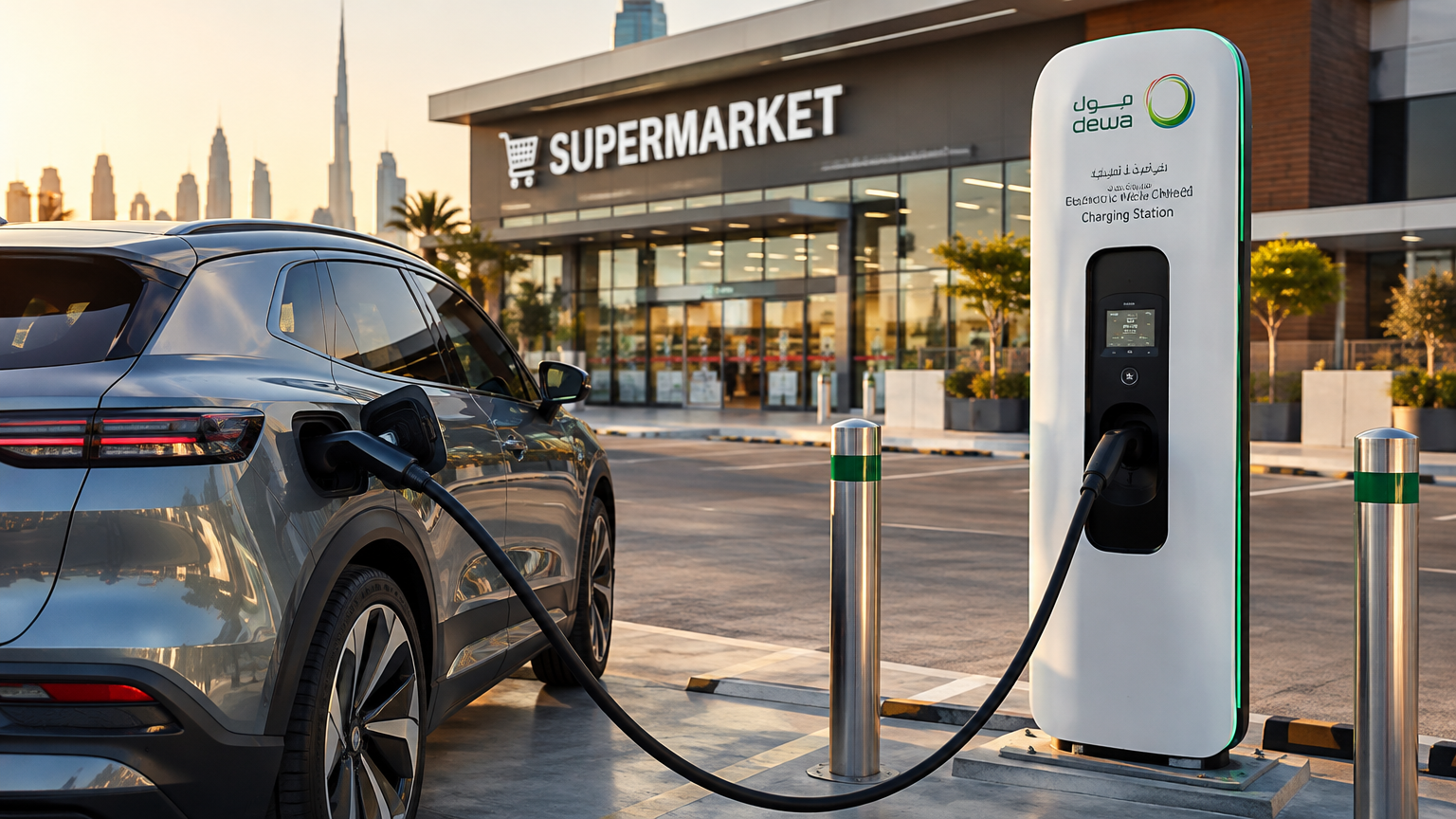
Finding EV charging Dubai supermarkets is increasingly practical for regular shoppers. Whether you visit Carrefour, Lulu, Spinneys, or Waitrose, you may have the chance to charge your electric vehicle while picking up groceries. This guide examines charging availability, speeds, costs, and whether your weekly shop gives enough time for a meaningful top-up.
Quick Summary
- Major supermarkets and hypermarkets (Carrefour, Lulu, Spinneys, Waitrose) offer AC Type 2 chargers at selected Dubai locations.
- DEWA regulated rates: AED 0.70/kWh (+VAT) for AC charging; AED 1.20/kWh (+VAT) for DC fast charging. (dewa.gov.ae)
- Supermarket chargers typically deliver slow-to-moderate speeds (7–22 kW AC). DC fast charging is rarely available at grocery stores.
- A typical shopping visit (30–60 minutes) allows for a mild-to-moderate top-up, adding 60–80 km of range with a 22 kW charger.
- Free charging promotions have largely ended following Cabinet Decision No. 81 of 2024, which standardised public charger tariffs across Dubai. (dewa.gov.ae)
EV Charging Availability at Major Supermarkets
Selected Carrefour, Lulu, Spinneys, and Waitrose locations across key Dubai districts now feature EV charging. Below is a summary of charger types, availability, and operating details you’ll encounter.
| Location | Charger Type & Speed | EV Charging Spots | Operating Hours | Cost per kWh |
|---|---|---|---|---|
| Carrefour – Motor City | AC Type 2, 22 kW | 6 spots | 08:00–00:00 | AED 0.70 + VAT |
| Lulu – Al Barsha | AC Type 2, 22 kW | 4 spots | 08:00–00:00 | AED 0.70 + VAT |
| Spinneys – The Springs Souk | AC Type 2, 7 kW | 4 spots | 07:00–23:00 | AED 0.70 + VAT |
| Waitrose – Upscale neighbourhoods | AC Type 2, 22 kW (where available) | 4–20 spots (varies) | Aligned with store hours | AED 0.70 + VAT for AC |
DC chargers at supermarket locations will follow DEWA’s regulated rate of AED 1.20 + VAT per kWh. (evmap.ae)
AC Chargers vs. DC Fast Charging: What’s Available
AC Type 2 Chargers
AC Type 2 is the standard at most supermarket locations across Dubai. These chargers deliver 7–22 kW and work well for topping up during a shopping trip. A 22 kW charger adds roughly 10–12 kWh in one hour, translating to 60–80 km of extra range for most EVs.
DC Fast Chargers
DC fast and ultra-fast chargers (50–150 kW) are uncommon at supermarket parking areas. You’ll find them more frequently at dedicated charging hubs, major malls, or petrol station networks. If you need a rapid charge, you may need to make a separate trip. (chargeae.com)
How Much Range Can You Gain During Your Shop?
The amount of charge you receive depends on shopping duration and charger speed. Here’s what to expect:
| Shopping Duration | Charger Type | Energy Added | Typical Range Gain |
|---|---|---|---|
| 30 minutes | 7 kW AC | 3.5–4 kWh | 20–30 km |
| 60 minutes | 22 kW AC | 10–12 kWh | 60–80 km |
| 30 minutes | 50 kW DC (if available) | 20–25 kWh | 120–150 km |
Estimates assume typical EV efficiency of 6–7 km per kWh under Dubai driving conditions.
Parking Rules and Time Restrictions
Most supermarket EV bays enforce specific rules to maintain charging access for all drivers:
- Time limits: Many locations impose a maximum stay of 1–2 hours in EV parking bays.
- Overstay fees: After charging completes or the time limit expires, idling fees may apply—sometimes per minute.
- Reserved status: EV bays are typically reserved exclusively for charging vehicles. Parking without charging may result in a fine.
- Signage: Always review posted notices in the parking area to understand local restrictions.
Costs and DEWA Pricing Standards
Dubai’s public EV charging is now regulated under standardised tariffs set by DEWA:
- AC charging: AED 0.70 per kWh + 5% VAT
- DC fast charging: AED 1.20 per kWh + 5% VAT
These rates apply to all public chargers throughout Dubai. Independent charging operators must comply with these minimums. Free charging through loyalty programmes is no longer standard following Cabinet Decision No. 81 of 2024. Always confirm current promotions directly with the supermarket or through their customer app. (dewa.gov.ae)
Choosing the Right Supermarket for EV Charging
When selecting where to shop and charge, consider these factors:
Charger Speed
Prioritise locations with 22 kW AC chargers over slower 7–10 kW options. A faster charger delivers meaningful range in a standard shopping trip.
Connector Compatibility
Type 2 is standard for AC charging at supermarkets. Verify your vehicle is compatible. DC chargers (CCS or CHAdeMO) are rare at grocery stores.
Rate Transparency
Look for clearly posted charges (AED per kWh), minimum charging duration, and any overstay penalties. This helps you budget and avoid surprises.
Parking Enforcement
Understand whether the EV bay is reserved, what time limits apply, and whether additional parking fees exist beyond charging costs.
Loyalty and Promotions
Some supermarket chains occasionally offer EV driver discounts or coupons. Check your loyalty app or ask store staff. Since regulated pricing is now standard, these deals are less common than before.
Is a Weekly Grocery Run Enough to Top Up Your EV?
Yes, with realistic expectations.
If your shop lasts 45–60 minutes at a location with a 22 kW AC charger, you’ll gain approximately 10–12 kWh. This translates to 60–80 km of additional range, which is meaningful for weekly commuting. For shorter 30-minute trips or slower 7 kW chargers, expect 3–5 kWh and 20–30 km of range—sufficient for local errands but not substantial long-distance gains.
Building EV charging into your routine shopping visit keeps your battery topped up and reduces the need for dedicated charging stops. Plan trips to stores with faster 22 kW chargers for better results.
Frequently Asked Questions
Are DC fast chargers available at supermarkets in Dubai?
Very few supermarkets offer DC fast charging. Most (Carrefour, Lulu, Spinneys, Waitrose) feature AC Type 2 chargers only. DC fast chargers are typically located at petrol stations, major shopping malls, or dedicated charging hubs rather than grocery store parking areas.
Do loyalty programmes cover free charging at these supermarkets?
Since Cabinet Decision 81 of 2024 standardised public charging rates, free charging through retailer programmes is rare. Some private “destination chargers” in malls may be complimentary for loyalty members, but this varies by location. Always check with the store directly. (gulfnews.com)
What will I pay per kWh at supermarket chargers?
For public AC chargers at supermarkets, the regulated minimum is AED 0.70/kWh + 5% VAT. DC chargers (if present) cost AED 1.20/kWh + VAT. Private or mall-based chargers may charge higher rates if additional services are included.
How long does a typical grocery shop take in premium areas like Marina or Business Bay?
Shopping in upscale districts typically lasts 45–60 minutes. During this time, a 22 kW AC charger will provide a meaningful top-up of 10–12 kWh. Faster shopping trips or slower chargers will yield smaller gains.
Are there penalties for staying too long in EV bays?
Yes. Many supermarkets and malls enforce overstay fees if you remain in an EV bay after charging is complete. Fees vary by location and are often charged per minute. Always review parking signage and comply with posted time limits.
Get Started with EV Charging at Your Local Supermarket
To find the best EV charging Dubai supermarkets near you, use apps like DEWA EV Green Charger, ChargeAE, or SHABIK. Search for 22 kW AC chargers at Lulu, Carrefour, Spinneys, and Waitrose locations in Downtown, Business Bay, Marina, or JBR.
Plan your weekly shop at a store with faster chargers and you’ll gain 10–12 kWh at the regulated AC rate of AED 0.70 + VAT per kWh. This simple habit reduces charging stress and keeps your EV ready for the week ahead.
Ready to optimise your EV charging routine? Find the best charging solution for your location and driving needs today.