Quick Summary
- Shared EV Charging in Apartments: Coverage of DEWA’s EV Green Charger network and how apartment dwellers without a home charger can access public charging stations.
- Installing a Charger Through Building Management: Steps to get approval, compliance with DEWA rules, technical requirements and a checklist for landlords/building managers.
- Developers with EV Charging Integration: Emaar’s track record of installing 80+ EV chargers and its commitment to include charging in future projects. Other developers like Nakheel and DAMAC are starting, with partnerships like Nakheel–Etisalat and DHCM–PlusX.
- Costs & Pricing: Rates from DEWA (AC vs DC), residential tariffs, upfront costs of installing private chargers, and what to expect when charging publicly.
- Fallback Strategies: How to use nearby public DEWA Green Charger stations wisely when private charging is unavailable, including guest mode and map tools.
Understanding Your Options for EV Charging Dubai Apartment
DEWA Shared Charging: What’s Publicly Available
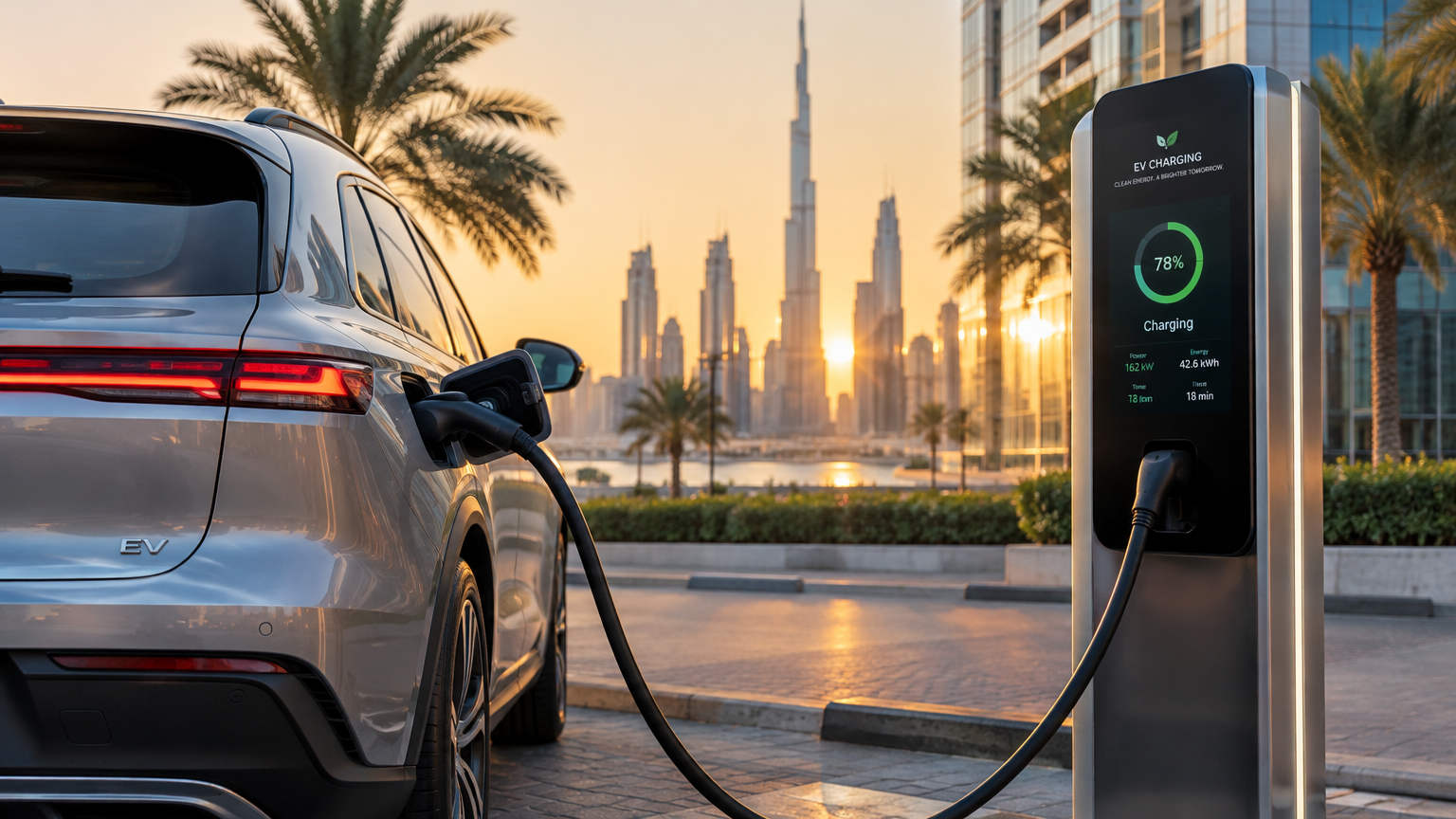
DEWA’s EV Green Charger Initiative has built a public charging network across the Emirate, with over 1,860 charging points by early 2026. Owners of electric vehicles in Dubai can use these public AC and DC chargers by registering under DEWA’s EV account or as a guest.
Rates for registered users are AED 0.70/kWh for AC and AED 1.20/kWh for DC, plus VAT. Using public charging is a reliable fallback if installing a charger in your apartment isn’t possible. However, costs can add up quickly, especially for frequent drivers or those needing fast DC charging.
How to Request EV Charger Installation in Your Apartment Building
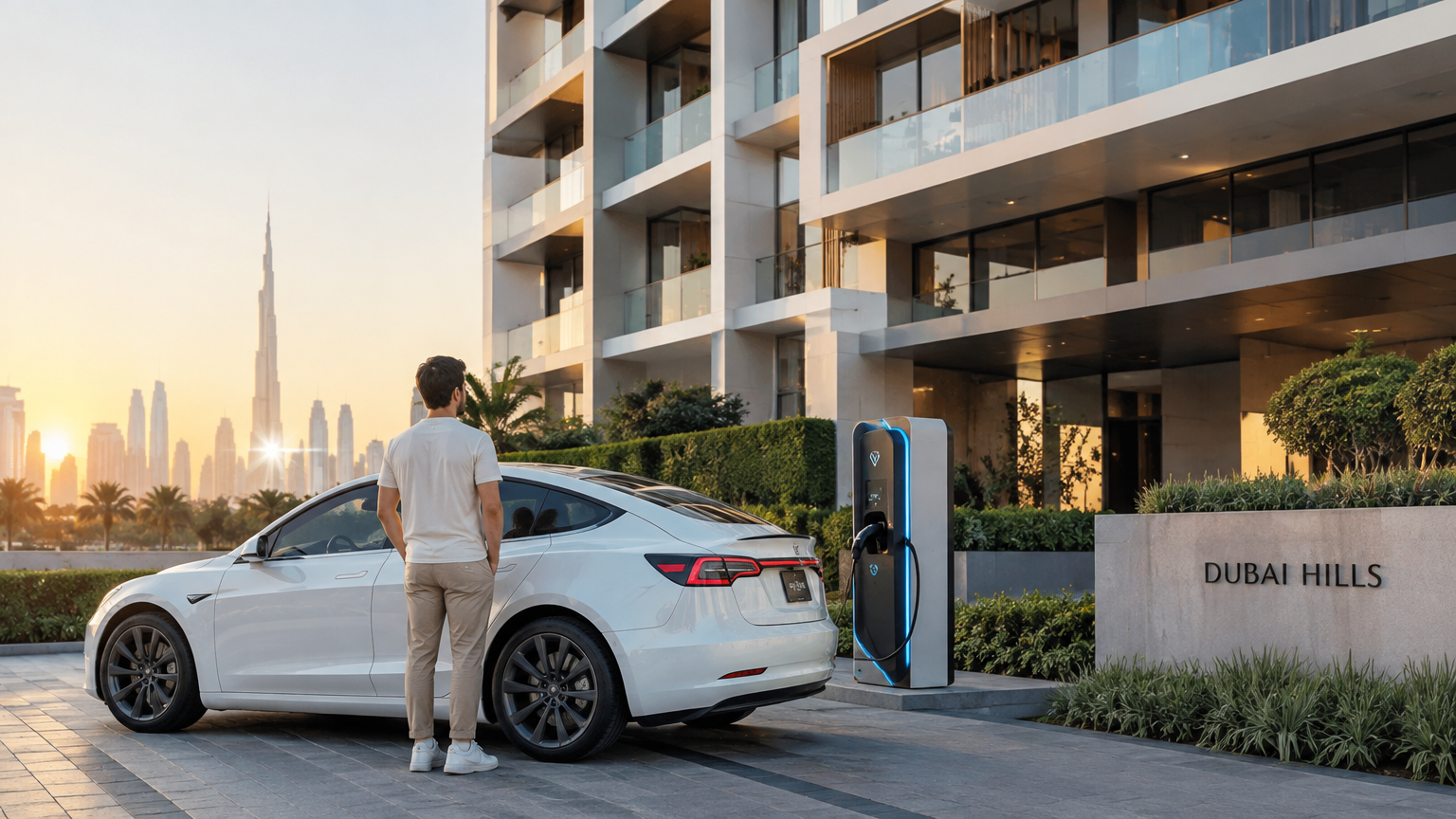
If you live in an apartment and want a home or semi-private charger in your dedicated parking bay, you’ll need approval from your landlord or building management. You must also meet DEWA’s technical standards.
What DEWA Requires: Regulation & Technical Standards
DEWA has clear requirements for EV charging installations:
- Connector Types: Private charging equipment may use flexible connector types. However, any public or shared charging equipment must use Type-2 connectors (for AC) and CCS2 connectors (for DC).
- Compliance Standards: You must ensure compliance with DEWA’s EV Charging Technical Regulations. This includes electric capacity planning, safety clearances, proper metering, installation by DEWA-certified contractors, and obtaining necessary permits from the Municipality or Trakhees.
Step-by-Step Checklist: Talking to Your Landlord and Building Manager
Use this checklist when seeking permission for charger installation in your apartment:
| Step | What to Do or Provide |
|---|---|
| 1 | Assess Demand: Speak with other EV owners in the building to demonstrate collective interest. |
| 2 | Technical Feasibility: Hire a DEWA-approved electrical consultant to evaluate power load, distribution board locations, cable distances, and electrical capacity. |
| 3 | Quotation & Proposal: Prepare quotations for charger hardware, installation works, and additional electrical infrastructure such as new meters, panels, and cabling. |
| 4 | NOC (No Objection Certificate): Request this from Building Management. Explain your plan, costs, cable routing, and safety measures clearly. |
| 5 | Regulatory Permits: Ensure you or your installer apply for any approvals with DEWA, Dubai Municipality, or Trakhees as needed. |
| 6 | Install & Metering: Decide whether the charger connects to your DEWA account or uses a new meter under the building’s account (with separate billing to you). |
| 7 | Maintenance & Access: Clarify responsibility for upkeep, parking spot access, and liability with building management. |
Typical costs vary depending on your building’s infrastructure. Private installations with proper cable pulling and a new meter usually range from AED 2,000 to AED 6,000 or more, depending on building age and design.
Developers Already Integrating EV Charging
Knowing which real estate developers in Dubai have invested in EV charging infrastructure gives confidence in future feasibility and resale value.
Emaar Properties
Emaar Properties and Emaar Communities have already installed 80+ EV chargers across residential communities through partnerships with Tesla and BMW. Their upcoming projects are planned with EV charging infrastructure built in from the start.
Nakheel
Nakheel Community Management signed a Memorandum of Understanding with Etisalat to install EV chargers across Nakheel communities. This partnership shows commitment to expanding charging infrastructure.
Dubai Holding Community Management (DHCM)
Dubai Holding Community Management recently partnered with PlusX Electric for flexible, on-demand charging solutions across the communities they manage, which include properties developed by Nakheel, Meraas, and Dubai Properties.
DAMAC
While DAMAC is a major developer, there is less public evidence that charging is already integrated in the same way as Emaar or Nakheel. Many residents in older DAMAC apartment buildings continue to struggle with approval or infrastructure challenges.
What It Costs: Private vs Public Charging
| Charging Option | Rate (AED/kWh) | Example Cost for 60 kWh Battery |
|---|---|---|
| Public DEWA AC (registered) | ~0.70/kWh + VAT | ~AED 45–50 for full charge |
| Public DEWA DC (registered) | ~1.20/kWh + VAT | ~AED 72 for full charge |
| Public Guest Mode | Same rate + one-time or session fees | Could be +AED 20-50 depending on duration and DC usage |
| Private charger at apartment (installation cost) | One-time AED 2,000-10,000+ depending on wiring and metering | After installation, charge at regular DEWA residential tariff (~AED 0.23-0.38/kWh depending on consumption slab) |
Understanding DEWA Tariffs
Your everyday DEWA residential electricity tariff is slab-based. For example, consumption of 0-2,000 kWh per month costs AED 0.230/kWh, with higher rates for increased usage. EV tariffs for public chargers are specifically set differently for AC versus DC charging.
Installing a private charger requires upfront investment. However, charging at your residential tariff afterward makes it significantly cheaper than relying on public DEWA Green Charger stations long-term.
Fallback Strategy: Using Nearby Public DEWA Green Charger Stations
If building installation is delayed or denied, these smart backup plans keep you mobile:
- Use DEWA’s Location Map: Find nearby Green Charger stations through DEWA’s website and app. Stations are available 24/7.
- Register for Guest Mode or EV Account: Access stations with lower per-kWh rates as a registered user compared to one-time guest charges.
- Plan Strategic Charging Trips: Schedule charging sessions near your regular routes—at malls, public parking, or ENOC stations—rather than out of your way.
- Leverage Developer-Installed Chargers: If your community has chargers installed by the developer, use them for potentially lower fees or better access.
These strategies mean you stay mobile even without private charging. However, for daily use, private charger access significantly reduces hassle and long-term costs.
Frequently Asked Questions
Can I install a private EV charger if I rent my apartment?
Yes, you can install a charger in a rental apartment. You’ll need a No Objection Certificate (NOC) from your landlord or building management first. Your installer must follow DEWA rules, including safety standards, proper metering, and electrical capacity checks.
What if my building doesn’t have spare electrical load?
Several options exist. You can install a separate meter tied to your parking bay, use power from the common distribution board if approved, or implement lower-power chargers (7-11 kW). Older buildings may refuse installation due to infrastructure limitations.
How long does approval typically take?
Expect 4-6 weeks from getting quotes through property management approval, DEWA permits, and technical inspection in buildings with responsive management. Older or larger towers may take longer.
Is a DC charger worth the cost for apartment users?
Unless you frequently drive long distances or need rapid charging, AC chargers (7-22 kW wall boxes) usually suffice for daily use. Fast DC chargers cost more both in installation and per-kWh consumption.
Do developers guarantee access to chargers in new apartments?
Many major developers now include this. Emaar states that upcoming projects will integrate EV charging infrastructure, and they’ve already installed 80+ chargers in existing communities. For other developers, confirm EV charging provisions in your purchase agreement before buying.
Ready to Get Started?
Here’s what to do if you’re ready to implement EV charging in your Dubai apartment:
- Review the checklist above and gather relevant building plans or electrical load certificates.
- Speak with your building manager using data—get a technical study, cost estimate, and show resident demand for charging.
- Get quotes from DEWA-approved contractors for installation work.
- While you move that forward, locate and register your vehicle with DEWA’s EV Green Charger network for seamless public station access.
When you’re ready to move forward, we can help you connect with trusted installers. They can assess your parking spot, provide accurate cost estimates, and guide you through all regulatory approvals.
Find the best EV charging solution for your Dubai apartment today—get a free quote from certified professionals.